



A logo can be recognised in seconds, but building a brand that remains memorable long after the first encounter requires considerably more than creating a symbol.
For Ghanaian Brand Designer Patrick Osei, the distinction between a logo and a successful visual identity lies in the thinking behind the design.
Over three and a half years working professionally as a Brand Designer at StarTech Multimedia Ltd in Ghana, Osei developed experience across logo design, visual identity, packaging, promotional materials, flyers and marketing communication.
A review of selected projects from this period provides an opportunity to examine how he approaches branding as more than an exercise in aesthetics. His work demonstrates an emphasis on consistency, audience understanding and the relationship between
individual visual elements.
Rather than treating each design asset as an isolated piece, Osei approaches branding as a connected visual system.
The Problem Behind the Picture
One of the defining characteristics of Osei’s approach is his attention to the problem a design is expected to solve.
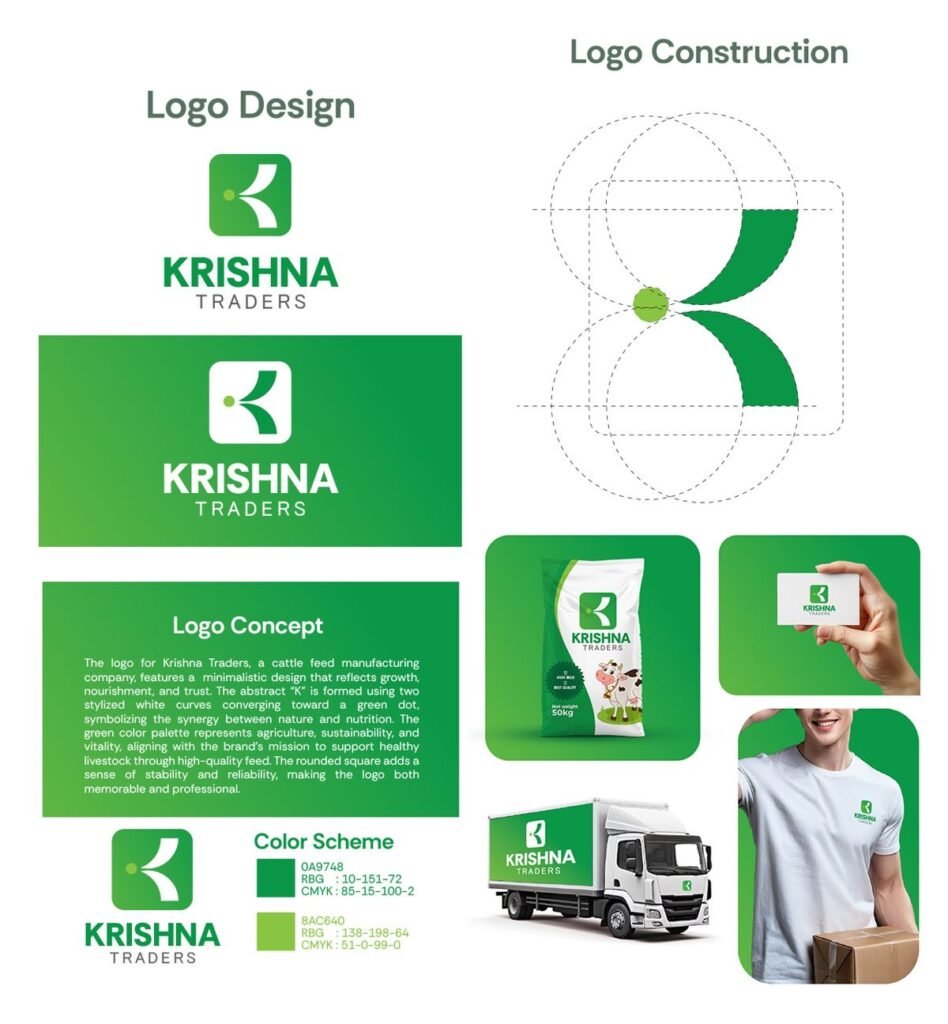
A business may initially approach a designer asking for a logo, but the underlying challenge can be considerably broader. The organisation may need to establish a more professional image, attract a
particular audience, differentiate itself from competitors or communicate the quality of its products more effectively.
Osei’s approach begins by considering this wider context.
“When someone comes to you asking for a logo, you have to understand why they need the logo. The design should solve the problem behind the request.”
Research → Concept Development → Logo → Typography → Colour → Packaging → Marketing → Digital Communication
This philosophy is reflected in his branding work, where the logo is considered as part of a broader
visual language rather than as the complete identity of a business.
Building Consistency
A recurring feature of Osei’s approach is consistency across different visual applications.
A brand identity may need to operate across business cards, social-media content, packaging, flyers, advertisements and other promotional materials. The challenge is ensuring that each application remains recognisably connected to the same organisation.
For Osei, typography, colour, composition, imagery and layout therefore need to function together.
“The logo is only one part of the identity. If the other materials don’t feel connected, the brand loses some of its strength.” This systems-based approach is particularly relevant for small and growing businesses, where branding can often develop informally without a clearly established visual framework.
By creating relationships between different design elements, the designer can help establish greater visual recognition and consistency.
Packaging as Communication
Osei’s packaging work provides another perspective on his design approach.
Packaging has a particularly demanding communication function. It must attract attention while communicating information quickly and clearly.

Unlike a standalone logo, packaging exists in an environment where consumers may encounter several competing products simultaneously. The designer must therefore consider hierarchy, readability, colour,
imagery, product positioning and the relationship between the packaging and the wider brand.
In Osei’s projects, packaging is treated as an extension of the visual identity rather than as an unrelated marketing object.
The design must not only look appealing; it must communicate.
This approach demonstrates the broader principle that Osei applies to his work: visual decisions should have a purpose beyond decoration.
Designing Within a Ghanaian Context
The environment in which Osei developed professionally also forms an important part of his creative background.

Working with Ghanaian businesses exposed him to clients with different commercial objectives, audiences and cultural expectations. It also required him to consider how contemporary visual communication could operate within a Ghanaian market.
However, his approach does not rely on simply inserting traditional Ghanaian motifs into every project. Instead, cultural context becomes part of the
thinking behind the design.
“Being Ghanaian influences how I see things, but I don’t think every design has to look traditionally African. The important thing is understanding the audience and making the identity authentic.”
This distinction is significant. Rather than reducing African design to a single visual aesthetic, Osei’s approach suggests a more contemporary understanding of cultural influence one in which personal and cultural experience informs the designer’s perspective without necessarily determining the final visual language.
From Commercial Brief to Visual Solution
Perhaps the most significant aspect of Osei’s professional development has been the connection between creative decisions and practical communication.
Branding ultimately concerns perception. A successful identity can help a business become recognisable, establish credibility and create a visual relationship with its audience.
Osei’s more than three and a half years at StarTech provided an environment in which this approach could develop through repeated exposure to commercial briefs and real-world client requirements.
“Professional work taught me that you can’t design only for yourself. You have to design for the people who will actually use and see the work.”
The statement reflects an important transition in a designer’s development: moving from creating work based primarily on personal taste towards making deliberate creative decisions based on communication objectives and audience needs.
A Designer Developing His Own Language
Osei’s practice continues to evolve.
His move from Ghana to the United Kingdom has introduced him to another creative environment
and provided opportunities to develop his practice independently while contributing to community
and organisational projects, including work associated with Humber All Nations Alliance and Ekklesia Hull.
These experiences have expanded the contexts in which he applies his design skills. Yet the foundation of his approach remains consistent: understand the problem, understand the audience and use design to communicate. For a designer working across different markets and cultural environments, that philosophy may prove more valuable than following any particular visual trend.
Conclusion
Patrick Osei’s development as a brand designer illustrates the distinction between producing
individual graphics and developing a coherent visual identity.
His professional experience at StarTech Multimedia Ltd provided an extensive foundation in commercial design, exposing him to the practical demands of branding, packaging and marketing communication.
His approach is centred on understanding the problem before developing the visual solution and ensuring that individual design elements work together as part of a recognisable identity.
As his practice continues to develop in the United Kingdom, these principles provide a foundation
for a designer whose work sits between commercial communication, visual storytelling and brand
strategy.
The evolution of that practice from Ghanaian commercial design projects to work across a new
cultural and professional environment offers a broader picture of a designer continuing to develop his creative language while remaining focused on one fundamental objective: using design to make ideas understood, remembered and recognised.


