Introduction and Background
This week, the president of Ghana, will from Tuesday, 12th February, 2019, publicly present the Constitutional Instruments (CIs) to give effect to the creation of six new regions in Ghana.
The need for decentralization and effective administration and development has been the underpinning factors in regionalism. According to the president, Akuffo Addo, the need for new regions stems from the need for faster and speedy resource distribution and the need to get governance closer to the doorsteps of the people. But what lessons does the entire referendum process teach us? And what positives can be taken from the process? I present to you my personal opinion on these processes as I observed from one of the villages in the yet to be created Western-North Region. This article will seek to highlight some of the unique Ghanaian traits that were revealed during the referendum processes.
What does the Referendum mean for Ghanaians?
On 27th December, electorates from six selected areas in Ghana went to the polls to decide in a referendum based on the recommendations of the Justice Brobbey Commission of Inquiry whether or not their regions be demarcated to create 6 new and additional regions. One may want to know what a referendum is. Basically, a referendum is a direct general vote by the electorates on a single political question which has been referred to them for a direct decision. The Commission’s decision for the need for the six new regions was based on six major considerations: the spatial extent of existing regions; road infrastructure; access to government and public services; economic and employment issues; employment and participation; and ethnic cultural and religious issues.
This means that the existing geopolitical regions of Ghana which stood at 10 was going to be increased to sixteen. Prior to the December 2018 referendum, the most recent administrative region had been the Upper West Region which was carved out of the former Upper Region, which is now the Upper East Region.in 1987. The proposed new regions are the Western North, which was demarcated from the Western Region, Bono East and Ahafo regions from the Brong Ahafo Region, whilst the Savannah and North East regions were being created out of the Northern Region. Last but not least is the Oti Region that was going to be delineated from the Volta region.
Supporters of Regionalism argue that the administrative regions are created with the intention of bringing governance closer to the people and to accelerate socio-economic development. I agree to some extent to this theory, especially for administrative and decentralization purposes, even though the case of the creation of the regions can only be at a level of Deconcentration, which is the weakest form of administrative decentralization, especially in a unitary state as Ghana.
Whether or not the creation of the new regions will automatically spur development, I hold the view that the creation of regions versus development nexus has no empirical bases, neither does it have enough historical antecedents with at least the Upper Regions (East and West) providing classic reference points.
Be as it may, this article which is my personal opinion will not seek to focus on the already rigorously exhausted subject and the debates about the merits and demerits or as it were, the cost benefit analysis of the referendum processes. Rather, as mentioned above, my article seeks to analyze a certain unique political behavior that was witnessed in the process leading up to the referendum, during and after the referendum. I call this behavior unity in diversity for a common purpose.
Let me submit that the overwhelming turnout and the subsequent outcome from the 27th December referendum do not only send a message of a people seeking development by acquiring a region, but it also shows a strong unity of purpose devoid of political, religious or ethnic affiliations amongst people, a trait which is hardly seen at least in the Ghanaian political space and scarcely highlighted by commentators and analysts.
Events Leading to the Referendum.
It is significant to note that I had the opportunity to observe the process in the proposed Western North Region. On the eve of the election, at around 5am in my village, Datano in the Sefwi Wiawso Municipality, where I was going to observe the process and of course celebrate my Christmas, I overheard on the radios and information centers playing voices of people speaking guan language, others were speaking Twi, Kusasi, Brosa, Anyin and of course Sefwi. This in particular struck me and got me thinking. That the pursuit of the region had transcended linguistic barriers. I saw Chiefs, Imams, and Pastors and members of clergy adding their voices to the campaign. That also sent a message that people could rise above religious affiliations. The sight of seeing NPP and NDC MPs standing on the same political platform with a common audience, not in the usual intensified arguments or disagreement but in harmony and cooperation drew my attention to the fact that the process had transcended partisan political considerations.
I saw chiefs, religious leaders, opinion leaders, Members of Parliament, Ministers and former government officials and Tertiary Students Unions campaigning everywhere in the streets. That also demonstrated the holistic nature of the process. Some donated cash and or in kind. Businesses, such as VIP Bus Company were giving free transportation services to prospective voters, Banks and other cooperate organizations all contributed towards the process. Some donated their cars, time, printers and other materials. There were many others who did not possess any of these, but they walked from villages, streets and house to house to send messages on the need to vote for the creation of the new region.
One striking thing to note is that some people had described the referendum as a politically expedient policy by the government in power. Others saw it as an ethnocentric move, whereas some saw it as Gerrymandering process being orchestrated by the government in power to divide the supposed strong base of opposition. Observing from the grounds will make you refute these claims and make one think again, that the process concerned the people and not the government per say. The phenomenal support exhibited by the likes of Dr Obed Asamoah and Kofi Adams who are themselves stalwarts of the opposition NDC and the likes of MPs Sampson Ahi, Kwabena Mintah Akandoh, Dr Augustine Tawiah, and other MPs belonging to the other side of the political divide has some significance. Perhaps the most significant of them all is the former president and NDC Presidential Aspirant, John Dramani Mahama, who declared his open Support for the creation of the Savana Region which culminated in contribution of an amount of 5ooo Cedis towards the process.
It could therefore be said that the issues to be determined were not based on partisan political considerations and by extension, ethnic or religious lines. Again, it goes to show that in as much as Ghanaians may be seen to be partisan at least most of the time, we have the proclivity to come together under a common interest to achieve a higher goal.
Observation & Lessons to Be Learnt.
Concomitantly, my observation revealed that the referendum did not see the usual acrimony and tensions that has characterized our national political parties elections, probably because people spoke as a single unit, speeches were more often than not, a call to unite and to forge a common purpose. It was an exercise of a people who saw their destinies beyond ethnic, partisan politics or religious lines. The old and the young were enthusiastic as they were hopeful. An old Lady I interacted with said to me.… ‘my son, it is not for me, it is for the generation to come. I stand to benefit but very little. But it is for the good of the future’. She recounted how the call for the region has been in existence for more than 4 decades.
If only Ghanaians can be as united as against hunger and poverty, against illiteracy and also against corruption, Ghana would be busting in development. If only Ghanaians will be united for our common developmental challenges such as health, and sanitation and other facet of our lives, we will see faster progress.
The prominence of chiefs became largely visible as most of them took to the stage to openly campaign. It could not be wrong to conclude that the chiefs were more or less the driving force and the rallying point. Perhaps it was about time we redefined the roles of our chiefs in the current democratic dispensation as it was quite clear that the chiefs presented a more united and potent front and with the euphoria, reverence, and rich culture and tradition that comes with the institution of chieftaincy, it will be very important if chiefs find space to play a more active role in our democracy.
Come September, 2019, there is going to be another important national referendum seeking to amend article 55(3) of the Constitution to allow for Metropolitan, Municipal and District Chief Executives (MMDCEs) to be elected. These essential Ghanaian traits will be needed to decide on this important issue as well.
Let me hasten to say that it was not everybody that supported the idea or even the process. In fact, there were fierce opposition in some cases, court injunction on the process and so on. The NO votes go to explain this. But this should be celebrated as part of the process to deepen our democracy that has its roots in respecting our unique diversity.
Was it a perfect process?
Now let me emphasize that the process was not entirely perfect. I will take the few lines to take time to accentuate some of the things that were not too pleasant in the process. Well I may not be able to enumerate everything in this short piece but certainly some of them need mention. It was observed rather interestingly that some of the electoral laws were either set aside or grossly broken either because of over-excitement or perhaps what I described as unity in crime. Cases in point include the law which bars all campaigns 24 hours to the polls. It was rather observed that the law was not enforced as most of the radio stations, information centers, moving vans as well as individuals were seen and heard campaigning vigorously throughout, even during the voting hours. In fact, one of the vans entered the observed polling station shouting……vote for YES vote for YELLOW color. More scandalous was the fact that some people wore attire that sought to suggest that voters voted in a certain direction, apparently…YES.
I realized through the process that some of the people had little idea on how to cast their ballots. Some just folded the paper after receiving it from the Electoral officers and just dropped it inside the box without casting the ballot. Also, other people were seen trying to use the baby finger that had the indelible inks to vote rather than using the Thumb and the voting ink. I must say that the absence of candidates on the ballot papers meant that some electorates who had been voting previously based on pictures of candidates either wrongly voted or had to sought for assistance. The principle of secret ballot in this case was questioned.
All in all, the enthusiasm was as strong as a tsunami and it was evident that the threshold (i.e. 50 percent turnout and 80 percent YES) was going to be met. However, some argued that although the percentage of YES vote was basically not in doubt, the voter turnout may have largely been exaggerated or ballooned. But we did not expect anything less considering the threshold of the referendum.
Conclusion
In conclusion, the referendum has brought to the fore, one of the important values in the Ghanaian political landscape; i.e cooperation and unity. Oftentimes a section of the media seeks to highlight the tensions and the contestations, probably that is what get the attention, but the little successes must be highlighted and at best, celebrated. It is my hope that the same energy and dynamism exhibited throughout the referendum would be translated into developing the various places of the regions. It is also my wish that the same spirit of unity and cooperation would continue to exist to build consensus in the development process not only in the newly-created regions, but the entire Ghana. Finally, there should be increased Civic education with focus on what binds us together.
It is worth stating that public education needs to be intensified concerning elections and democracy in general. There should be increased public education on acceptable electoral practices by the media as well as other state institutions such as the National Commission on Civic Education (NCCE) and the Electoral Commission. It is my hope that as the CI is being presented, the subsequent choosing of the regional capitals in these new areas will be as smooth as the referendum itself and Ghana will be the ultimate winner.
M’ano asi
By Dominic Offei.
Twitter: @dominic_offei
Facebook:@offeidominic
About the Writer:
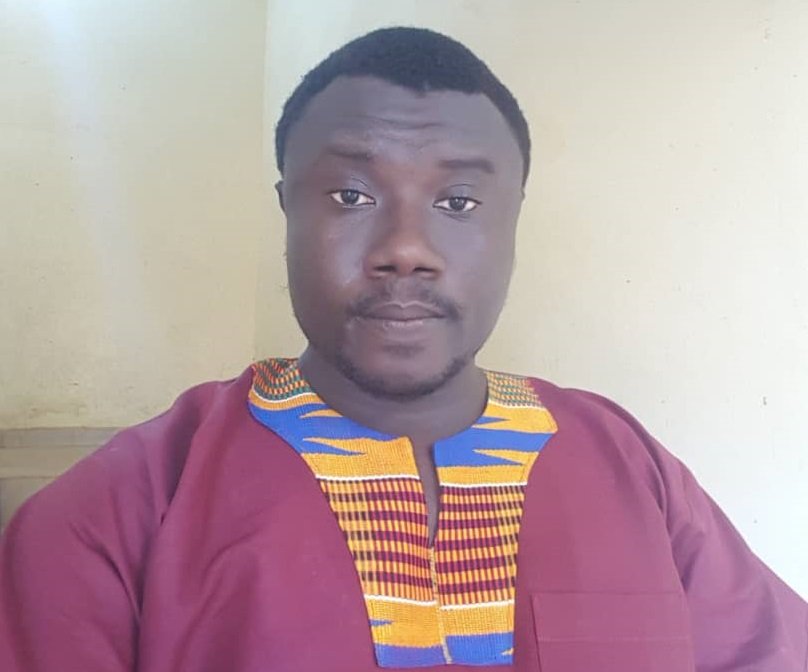
Dominic Offei is an African Union Scholar pursuing Governance and Regional Integration at the Pan-African University Institute of Governance, Humanities and Social Sciences. He is also a recipient of the ECOWAS Fellowship from the University of Ibadan with a Master of Science in Political Science (International Relations). He is also a YALI – RLC Accra Fellow.
Email: offeidominic@gmail.com