After months of intense debate on whether Ghana should seek support from the International Monetary Fund (IMF) following the mounting economic challenges arising from a decade of poor domestic revenue mobilization performance, with its attendant ballooning public debt stock, the President of the Republic has finally taken a decision.
On Friday, July 1, 2022, the President, Nana Addo Dankwa Akufo-Addo, directed Finance Minister Ken Ofori-Atta to commence formal engagements with the International Monetary Fund (IMF), asking the fund to support an economic program put together by the Government of Ghana.
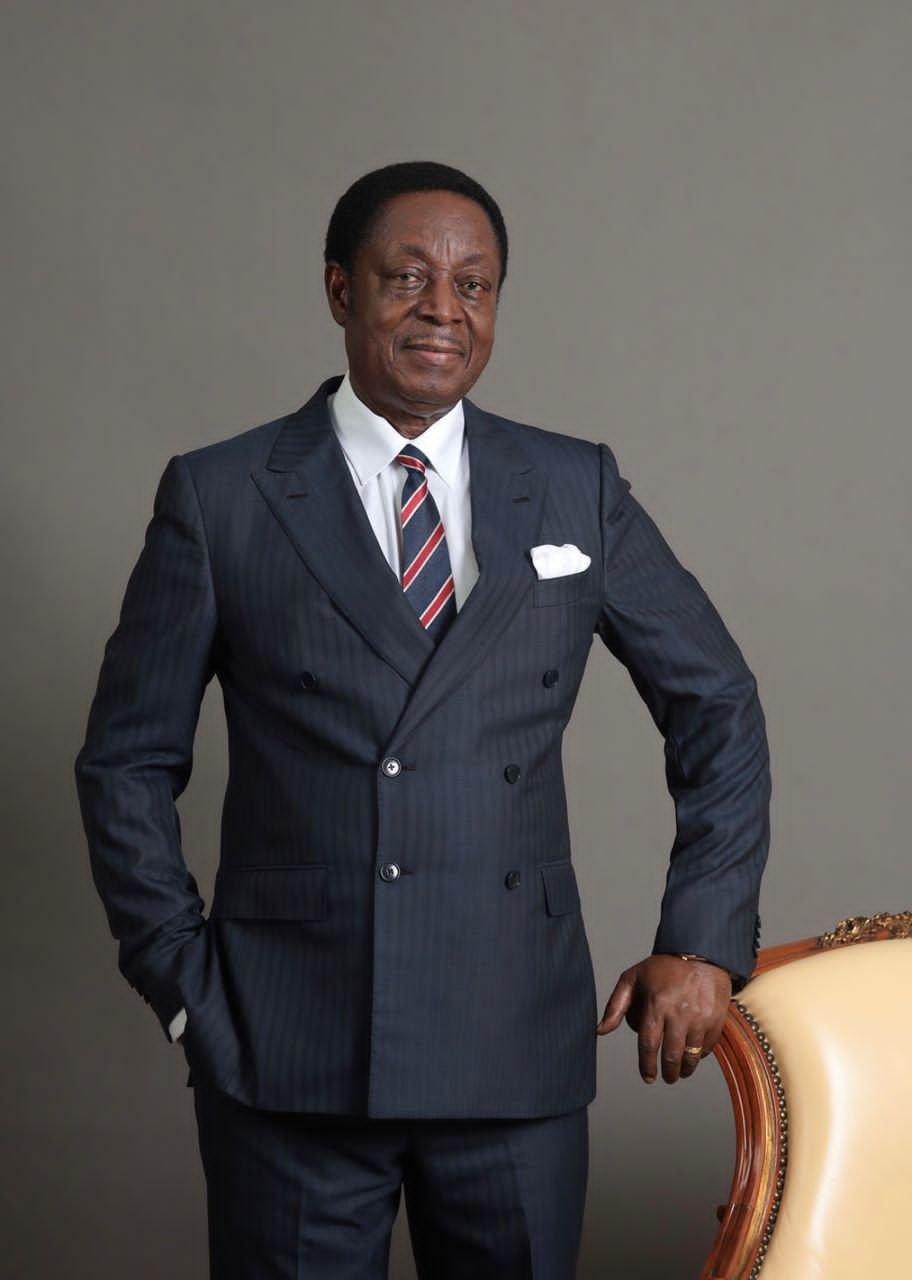
First, His Excellency the President should be commended for this decision, as it is necessary and timely, and I recognize the immense pressure the President may be under as he takes these steps towards economic recovery. However, as a former Governor of the Bank of Ghana and former Finance Minister, I gained some experience in stewarding this nation’s economy safely and successfully from 2009 to 2012, and I would be remiss if I did not offer my piece of advice as Ghana, once again, turns to the IMF for help at this critical moment.
BALANCE OF PAYMENTS SUPPORT
The statement of July 1, 2022, said, “The engagement with the IMF will seek to provide a balance of payment support as part of a broader effort to quicken Ghana’s build back in the face of challenges induced by the Covid-19 pandemic and, recently, the Russia-Ukraine crises.” This statement has a crucial flaw, as the issues, we now face predate the coronavirus pandemic and the Russia-Ukraine war. This is not the first, nor the second, but rather the eighteenth time that Ghana is going to the IMF for a bailout—and that number alone speaks to much larger structural barriers in the management of the economy and, by extension, the Ghanaian society, which has made the balance of payments a persistent source of crisis given our failure to address the underlying causes.
As a nation, we should not be in debt, for God has amply blessed us with natural riches and resources. But as these have been mismanaged, they do not benefit Ghanaians but rather the external forces who control them. For decades, we have been borrowing to build our reserves because of the situation where key resources such as gold, minerals and petroleum are not in the hands of Ghanaians, giving foreigners control over the proceeds from the export of these resources and undermining our ability to generate adequate revenue for development and to accumulate ample reserves to offset external shocks. We then turn to foreigners, through borrowing, to solve what is undoubtedly a self-imposed misery. This unfortunate situation was thrown into sharp relief when on March, 21, 2022, the Finance Minister, Ken Ofori-Atta, stated at a press conference on the economy that, “Though the rise in crude oil prices should have been to our benefit on net basis, Ghana’s import of petroleum products amounts to 5.2 times the value of the proceeds from its crude oil exports. In 2021, we exported $3,947.70 million, of which Ghana’s portion was $513 million. However, we imported $2,719.00 million of crude oil and finished products. The purported windfall gain in foreign exchange is a mirage.” This structural issue is what desperately needs to change.
E-LEVY
The Government of Ghana passed the Electronic Transfer Levy (e-levy) Bill with the hope that it will rake in enough revenue to be able to access the international capital market to borrow and stabilize the economy, and also to finance development. According to the 2022 budget statement, the Government of Ghana is projected to raise a total revenue of GH₵100.5 billion and spend GH₵137.5 billion. These estimates were hinged on the successful implementation of the e-levy, with expected revenue of GH₵6.9 billion. However, according to some government officials, the e-levy raked in only 10% of the expected revenue in May 2022. This puts the e-levy revenue projection in 2022 in doubt. Therefore, the budget deficit without e-levy will be about GH₵43.9 billion.
OVERCOMING STRUCTURAL BARRIERS TO REVENUE MOBILIZATION
Thus, as of today, we have a gap of about GH₵43.9 billion between expenditure and revenue. This is consistent with the trend over the past decade, where our governments have been unable to grow revenue to match our expenditures, partly due to structural barriers to effective tax revenue mobilization.
Despite decades of tax reforms, domestic revenue mobilization has only increased at a slow pace in Ghana. Generally, the revenue gains from tax reform measures have not matched expectations, and in the past five years, the ratio of total government revenue to GDP appears to have stagnated at around 15%, contributing to the persisting weak fiscal situation.
While much focus continues to be placed on tax policy to help boost domestic revenue mobilization, it is important to realize that, as a developing economy, there are significant structural barriers to the country’s ability to substantially increase domestic revenue mobilization through the tax system in the short term.
These structural barriers include:
- The predominance of informal economic activity, which especially narrows the income tax base, as more than 80% of the labor force and the majority of businesses are located in the informal sector. Informality restricts effective tax revenue mobilization because of challenges in identifying or establishing a reliable tax base for revenue generation.
- Low incomes and high poverty levels, which constrain the size of taxable income and transactions while causing the tax burden to be concentrated on a small minority of individuals and businesses.
- The relatively high share (compared to richer economies) of agriculture in overall economic activity, limits revenue mobilization, since agriculture is largely informal, not fully commercialized, and is characterized by low earnings.
For these reasons, and until these barriers are overcome, traditional tax policy will continue to have limited effectiveness in considerably increasing domestic revenue mobilization in Ghana in the short term. This provides an important justification for the country, at its present stage of development, to pay special attention to revenue mobilization from its well-endowed extractive sector by implementing a fiscal model which maximizes the benefits and earnings received by the state from the sector.
Indeed, research by the Institute for Fiscal Studies (IFS) has shown that despite facing the same structural constraints, other developing countries generally mobilize more government revenue as a proportion of GDP than Ghana largely because of stronger revenue generation from their extractive sectors. This means that the extractive sector has the potential to help the country raise substantial additional domestic revenue to finance development and to close its revenue gap vis-á-vis peer countries. The structural barriers to rapid tax revenue generation can, meanwhile, be addressed incrementally and over time as the economy is modernized and transformed.
As a nation, this is a path we should have followed instead of creating a vicious cycle of crises and short-term solutions. There is a big difference between a plan and a strategy, the former being formed ad-hoc in crisis and the latter built upon vision and foresight in times of tranquillity. Ghana needs a new strategy, based on the simple and age-old idea that you cannot spend what you have not earned and not reap what you have not sown. During my tenure as Finance Minister (2009–2012), I dealt with crises of my own that I inherited upon taking office in 2009. As my record shows, I led my committed staff at the Ministry to turn the economic tide and achieve the highest economic growth as well as the most sustained low level of inflation in the history of our country since independence. We achieved this by prioritizing revenue without cutting into the social intervention programs that the poor and vulnerable depend upon for their survival.
THE PROGRAM
President Akufo-Addo is facing difficult times ahead, but he is also presented with a golden opportunity to change this country for the better. The IMF program, which the President will preside over, must focus on at least three goals:
- Address the macro-economic imbalances and preserve macro-economic stability
- Protect the poor and the vulnerable and keep the social agenda intact
- Ensure that a core investment program that preserves medium-term growth prospects is put in place to create jobs for the citizens of Ghana, especially the youth.
In other words, the IMF program must contain not only a plan to achieve macro-economic stability but also one to achieve growth—which should be directed towards helping the needy and vulnerable of our society, the group that is suffering the most in this current economic crisis and will continue to suffer if this country cannot gain true financial independence.
We must remember that an IMF bailout is not a gift; it is a loan, and as such, it has to be repaid on the terms of the lender. It is said in Proverbs 22:7: “The rich rule over the poor and the borrower is slave to the lender.” These words should remind Ghanaians of the situation we find ourselves in.
President Akufo-Addo speaks often and passionately about creating a “Ghana beyond aid”, but that dream of independence cannot be realized when receiving bailouts from the IMF whilst external forces are controlling our natural resources. To emphasize the point: Today, our minerals and other natural resources are not owned by Ghanaians; therefore, the bulk of the revenue accrued from these natural resources is retained by these non-resident individuals and companies, and as such revenues from these natural resources do not impact the cash flow of central government. Simply put, we have no control as rightful owners of the God-given natural resources. This is a crucial structural flaw that must be corrected, and it is important that we use this crisis and the IMF bailout as an opportunity to change the structure of Ghana’s economy to benefit all Ghanaians.
As we are about to enter our eighteenth IMF program, we must understand that no number of bailouts can save us unless we change this faulty structure. Our country can only prosper when Ghana’s natural resources are efficiently managed in a disciplined environment.
By Dr. Kwabena Duffuor