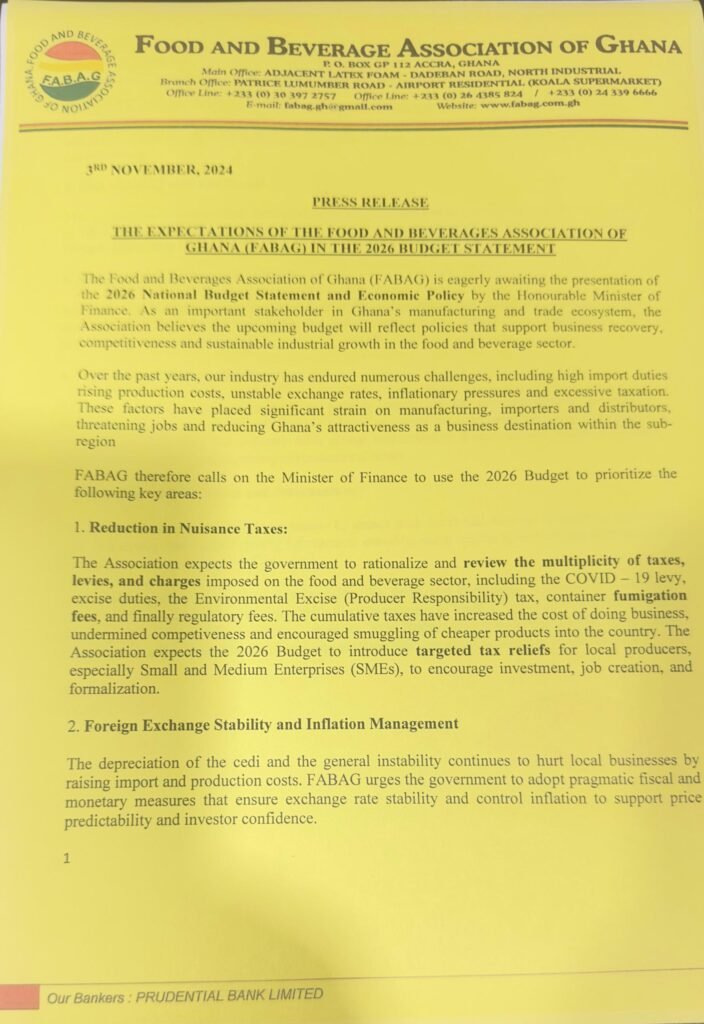
The Food and Beverages Association of Ghana (FABAG) has outlined its expectations ahead of the presentation of the 2026 National Budget, urging the government to adopt business-friendly measures that will ease the burden on manufacturers, importers, and distributors within the sector.
In a statement on Monday, November 3, 2024, FABAG said it anticipates that the upcoming budget will focus on reviving industries, enhancing competitiveness, and promoting sustainable growth in Ghana’s food and beverage space.
The Association noted that the sector has faced significant challenges in recent years, including high import duties, rising production costs, unstable exchange rates, inflation, and excessive taxation — all of which have weakened the local manufacturing base and made Ghana less attractive for investment.
FABAG is calling on the Minister of Finance to address these concerns by reviewing the numerous taxes imposed on the industry, such as the COVID-19 levy, excise duties, and the Environmental Excise (Producer Responsibility) tax.
It warned that the cumulative effect of these levies has driven up operational costs and encouraged smuggling of cheaper goods into the market.
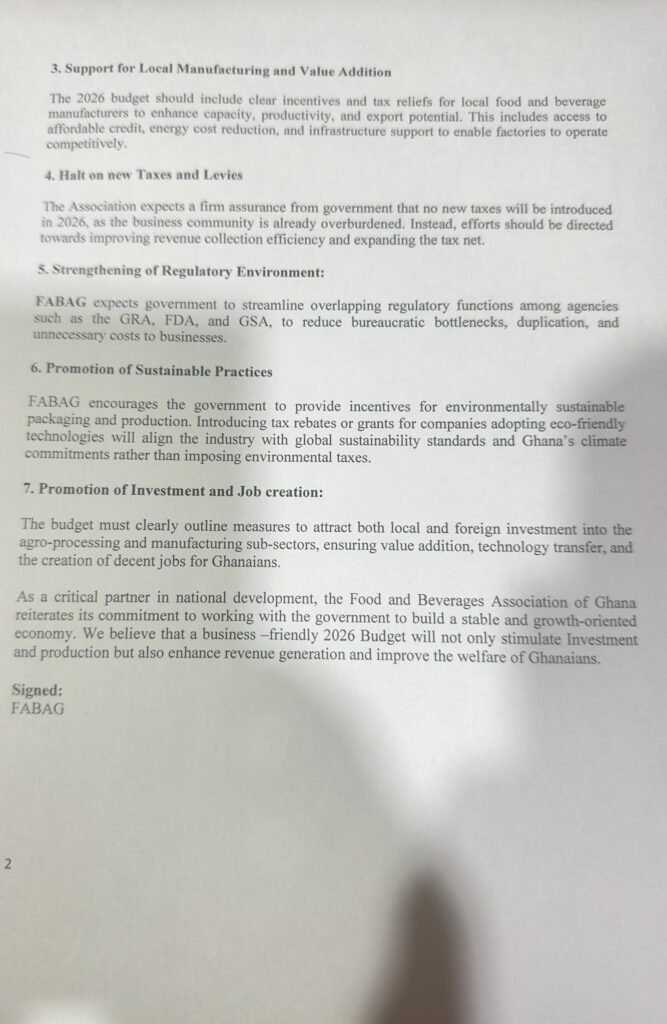
The group also appealed for concrete measures to stabilise the cedi and manage inflation, saying currency volatility continues to increase the cost of doing business. It further urged the government to support local manufacturing with tax incentives, access to affordable credit, and lower energy costs to improve production and export capacity.
A portion of the statement noted, “The cumulative taxes have increased the cost of doing business, undermined competitiveness and encouraged smuggling of cheaper products into the country. The Association expects the 2026 Budget to introduce targeted tax reliefs for local producers, especially Small and Medium Enterprises (SMEs), to encourage investment, job creation, and formalization.”
FABAG stressed that no new taxes or levies should be introduced in the 2026 Budget, as the private sector is already overburdened. Instead, it proposed that government improve revenue mobilisation by expanding the tax net and enhancing collection efficiency.
The Association also called for the streamlining of regulatory roles among agencies such as the Ghana Revenue Authority (GRA), Food and Drugs Authority (FDA), and Ghana Standards Authority (GSA) to reduce bureaucracy and costs to businesses.
Additionally, FABAG encouraged the government to support sustainable practices by providing tax rebates or grants to companies adopting eco-friendly packaging and technologies, rather than imposing environmental taxes.
Finally, the Association urged the government to focus on policies that attract investment, boost agro-processing, and create jobs, emphasising that a supportive and predictable business environment would help rebuild confidence and stimulate national economic growth.
FABAG reaffirmed its commitment to collaborating with the government to build a stable and productive economy, expressing optimism that a well-structured 2026 Budget could revitalise the sector, generate more revenue, and improve the livelihoods of Ghanaians.
Below is a copy of the statement
Source: Starrfm.com.gh