The cocaine that left Ghana
On 10 September 2026, French customs officers at the port of Dunkirk seized almost 3.9 tonnes of cocaine. It was concealed inside a container of plastic waste that had arrived from Ghana. The estimated street value was €225 million. Part of the shipment was reportedly destined for Antwerp. French authorities had already been targeting the criminal network suspected of organising it.
The drugs were caught on French soil. That is where the visible success took place. But for Ghana, the harder question sits earlier in the journey. How did nearly four tonnes of cocaine leave the country in the first place? That is a national security question, not a minor one, and it is one we cannot avoid asking.
Ghana’s Narcotics Control Commission has since arrested suspects connected to the shipment. Four of them have been arraigned in Accra and remanded, while investigations into the wider network continue. They are presumed innocent unless proven otherwise. The government has also set up an inter-agency task force to look into how it happened. But arrests made after a foreign authority intercepted the drugs are not, on their own, reassuring. The real issue is whether
Ghana’s ports, customs systems, security institutions and commercial infrastructure are effective enough to stop trafficking organisations using the country in the first place. This is no longer about one container. It is about what Ghana is becoming in the international narcotics trade, and what the NDC government is doing about it.
Twenty years of warning signs
This is not the first time Ghana has faced this kind of reckoning. During President Mahama’s first term, in November 2014, Nayele Ametefeh was arrested at Heathrow carrying 12.5 kilograms of cocaine. She had passed through the VVIP section of Kotoka International Airport without incident. She was later sentenced to eight years and eight months. Questions were raised at the time about how someone carrying that quantity of cocaine moved through the presidential transit lounge undetected. Those questions were never fully answered. Twelve years on, the method has changed. It has moved from a passenger’s hand luggage to multi-tonne shipments hidden inside
commercial containers. The underlying vulnerability looks much the same.
This is bigger than one shipment
The September seizure is not an isolated incident. In August 2026, police intercepted 866 parcels of suspected cocaine concealed in sacks of gari at a warehouse inside the Tema Port enclave. It was worth an estimated $6.9 million and allegedly prepared for export. Three suspects were arrested, and investigations continue.
In April 2025, NACOC intercepted about 89.7 kilograms of suspected cocaine at Swissport in
Accra, reportedly bound for the Netherlands. A month earlier, a tipper truck was stopped at Pedu Junction near Cape Coast carrying over 3.3 tonnes of cocaine concealed under sand, valued at more than $350 million. A second consignment of about 120 slabs, worth $150 million, was intercepted on the same route around the same time. Separately, the MV Sankofa, sailing under a forged flag, was released by the Ghana Maritime Authority after paying only a fraction of the nearly GH¢12 million fine it was liable for. Parliament’s Minority Caucus has since tallied drug seizures linked to Ghana over the past two years at more than $1 billion.
Taken together, this pattern raises a genuine question for the NDC government. Are these isolated attempts that security agencies are successfully catching? Or is this evidence of a deeper vulnerability in the country’s ports, airports, logistics systems and border controls? The question is sharper still because NACOC itself, not the opposition, has acknowledged that Ghana is increasingly becoming not just a transit point but a distribution hub for illicit drugs. That is why the Dunkirk shipment demands more than arrests. It demands an account of how the system is being
exploited, how often, and who is responsible for closing the gaps.
From transit point to distribution hub
In July, NACOC’s Director-General, Brigadier General Maxwell Obuba Mantey, said Ghana was
increasingly becoming not only a transit point but also a distribution hub for illicit drugs. He made the statement while announcing new drug detection scanners at Kotoka. A transit country is already a serious security problem. A distribution hub implies something deeper. It suggests criminal networks find Ghana useful not just for passing through, but for organising, storing and distributing narcotics.
That admission sits uneasily alongside NACOC’s own disclosure that the body and baggage scanners at Kotoka had been non-operational for some time. Full replacement was only expected by August 2026. Mobile scanners were provided in the interim by the government and the Netherlands. By September, French authorities had caught nearly four tonnes of cocaine in a container that had left Ghana. Nobody should claim the non-operational scanners caused that
particular shipment, since the cocaine moved through a commercial container, not passenger baggage. But the wider question stands. How many similar vulnerabilities exist across Ghana’s ports, airports, customs procedures and border controls? And why were they allowed to persist if the government’s own agency was already describing Ghana as a distribution hub?
Where was the government?
The harder questions concern what happened before the cocaine ever reached France. According to the prosecution’s case, the four containers linked to the shipment were scanned at Tema Port before they left Ghana. The charge sheet alleges the scan images showed abnormalities that were nonetheless cleared. Four Ghana Revenue Authority customs officials have been accused of abetment in connection with the scanning process. None of this has been tested in court, and all six accused are presumed innocent. But the questions it raises are legitimate regardless of how
the case concludes. Who examined the images? What did they actually show? Were the abnormalities escalated to anyone? Who authorised the containers to proceed, and what additional checks, if any, were carried out before they left Tema Port?
President Mahama has ordered an inter-agency task force to review the country’s detection systems and submit a roadmap within two weeks. The Presidency has confirmed that customs officers are among those in custody. That response is necessary. But it invites an obvious follow-up question. Why did it take a €225 million shipment being caught in France for Ghana’s
own systems to face this level of scrutiny? The government owes the country a clear account of
what happened at Tema Port, where the system failed, and what will stop a shipment of this size
leaving undetected again.
Arrests and seizures are not enough
The government will point to the arrests, the seizures, and the international cooperation. All of that matters. But NACOC has also said the suspects connected to the French shipment had beenunder surveillance for between one and two years before their arrest, with intelligence already gathered on their activities and connections. If people allegedly linked to a nearly four-tonne shipment were on the radar of Ghana’s narcotics authorities for up to two years, the fact that a
consignment of this scale still made it through Ghanaian export systems is the more troubling
story. Not the eventual arrests.
The real objective has to be dismantling the network, not just catching the people at its edges.Who finances the operation? Who provides the warehouses? Who arranges the containers? Who handles the freight forwarding and documentation? Who receives the proceeds? Who protects the operation while legitimate cargo is used as cover? NACOC has itself said that tackling the trade means disrupting the people, finances and infrastructure sustaining it. That has to be the standard applied here. A courier can be arrested. A container can be seized. A warehouse can be searched. But if the financiers are untouched, the network simply replaces whoever was lost at the bottom, and the business continues. Ghana needs investigations that follow the money and expose the network behind every major shipment, not just the people carrying it.
What is happening to Ghana
The danger is not confined to cocaine or to the routes used by major trafficking organisations, and
it is not a threat happening somewhere else. It is one we are already living with. The UN Office on
Drugs and Crime estimates that up to 30 percent of Europe’s cocaine supply now transits through
West Africa, with Ghana serving as a principal landfall point alongside Guinea-Bissau. That scale of flow leaves a domestic footprint. The Global Initiative Against Transnational Organized Crime has found that cocaine prices in Ghana fell by 60 percent between 2019 and 2023. That collapse points to rising local supply and distribution, not pure transit.
The wider figures bear this out. NACOC reported 217 arrests and 165 prosecutions during the period under review, alongside the interception of more than 8.5 tonnes of assorted narcotic drugs and 45.4 million tramadol tablets. The Commission has acknowledged that traffickers are increasingly turning to pharmaceutical and synthetic drugs alongside cocaine, heroin and cannabis. In July, NACOC intercepted nearly five million tramadol tablets at Kotoka, worth an estimated GH¢100 million and believed destined for distribution in Ghana and the wider sub-region. At Tema Port, customs separately intercepted more than 146 million undeclared tramadol tablets in March. Nine public officers were arrested in connection with the case, including personnel from customs and NACOC. These are allegations under investigation, not proof of guilt.
None of this reduces to one container of cocaine. It is about Ghana’s vulnerability to organised drug networks, the movement of narcotics through legitimate commercial channels, and the
possibility that criminal organisations are exploiting weaknesses in the very systems meant to stop them. The government says it is responding. The opposition is demanding answers. But beneath the politics is a simpler fact. This has become a national security problem, and Ghana needs to know whether its institutions are staying ahead of the traffickers, or only reacting once the damage is done.
What Ghana needs now
Ghana does not need another cycle of outrage followed by temporary measures. It needs a system that makes it significantly harder for trafficking networks to operate through the country. That starts with proper joint security controls at the ports. The government has announced that NACOC will be restored to the joint container inspection process, a change that raises the question of why it was needed only after a €225 million shipment had already left. It also means functioning detection technology at every major entry and exit point, backed by trained personnel, given NACOC’s own admission that the Kotoka scanners were out of action for some time before replacements arrived.
Beyond equipment, it means following the money rather than only the product. Trafficking depends
on financiers, logistics, warehouses, companies and accounts as much as it depends on couriers. NACOC has already identified this as the standard it should be working to. It also requires the country’s intelligence agencies to function as one system rather than several. The current task force has two weeks to produce a roadmap. That roadmap needs to result in measurable change, not another report that quietly disappears. And it requires genuine accountability. If officials failed
in their duties, the evidence should determine what follows. If systems failed, they need to be fixed. If criminal networks exploited institutional weaknesses, those networks need to be dismantled, not merely disrupted at the edges.
This is bigger than which party happens to be in office. But the NDC government is in office now, and it carries the responsibility to explain what happened, identify where the system failed, and show what has changed since nearly four tonnes of cocaine left Ghana for Europe.
The question we cannot avoid
Nearly four tonnes of cocaine left Ghana in a commercial container and were caught in France.
That fact alone demands answers. The government has responded with arrests, investigations and a task force. Ten people, including four customs officers, are reported in custody, and there is a two-week deadline for a roadmap on border controls. Those steps matter. But they do not answer the central question. How did the shipment pass through the country’s export-control
system? What did the scanners actually show? Who examined the images and cleared the containers? Were there intelligence warnings that went unheeded? And if wrongdoing is established, who else was involved?
Ghana cannot keep finding itself in a position where international authorities intercept major shipments linked to the country, while Ghana explains what happened only after the fact. The issue is not simply the cocaine seized at Dunkirk. It is whether the country is becoming more attractive to international trafficking organisations, precisely because weaknesses in its systems can be exploited, and NACOC has already warned that this is happening. The government owes Ghanaians a full account of what happened at the ports, what failed, and what has actually been fixed. The cocaine was caught in France. I do not think Ghana can afford to wait for the next
shipment before asking these questions. The questions it raises are still ours to answer.
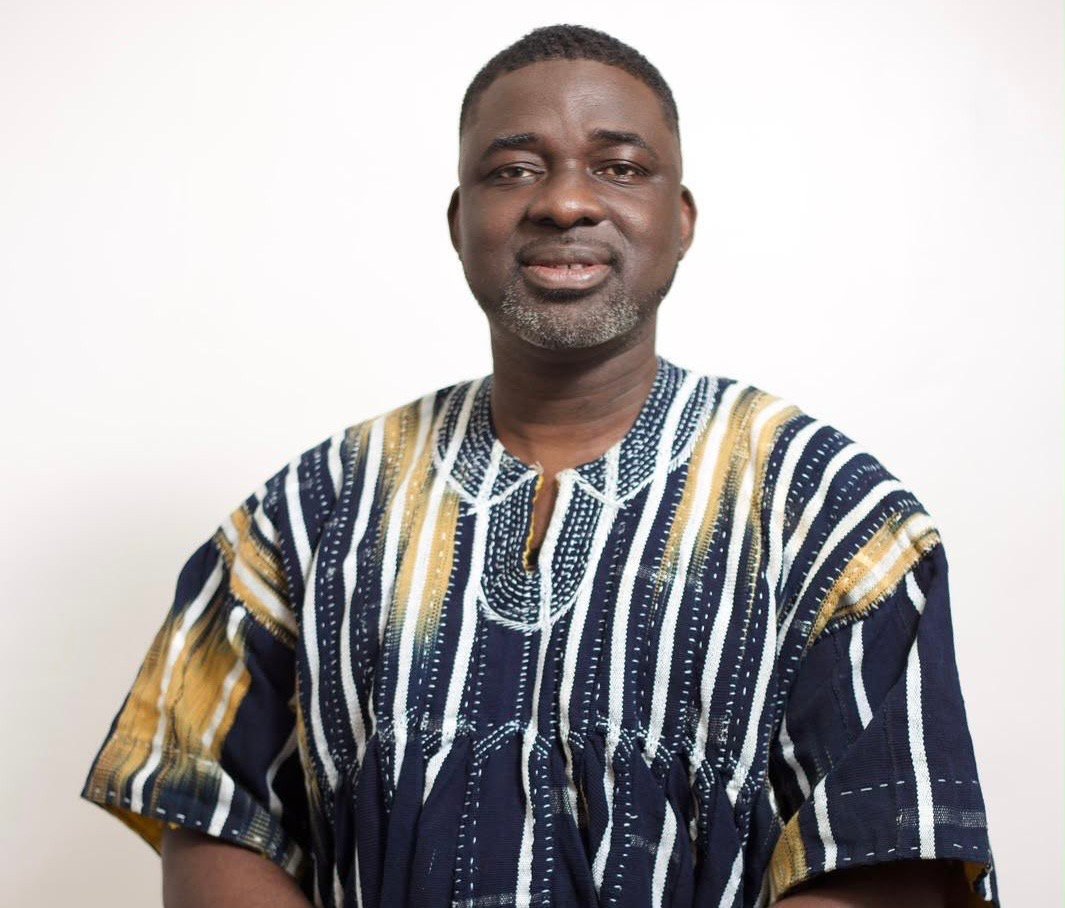
By Mark Cudjoe, Research Officer, East London Chapter, NPP UK
Disclaimer: This opinion piece reflects the personal views of the author and does not represent the editorial stance of starrfm.com.gh.