


The sun had barely risen over Jamestown Beach in Accra when fishermen hauled their canoes ashore after hours at sea. Their nets held only a few fish, another
disappointing catch in waters increasingly strained by illegal fishing.
Veteran fisherman Paa Ekow pulled at his nearly empty nets and shook his head.
“We only caught a few fish. We spend a lot of money to buy fuel to power our canoe only to return with a small catch,”he said.
It is a familiar story for many of Ghana’s small-scale fishermen, who say they are battling not only dwindling fish stocks but also the growing impact of illegal, unreported and unregulated (IUU) fishing.
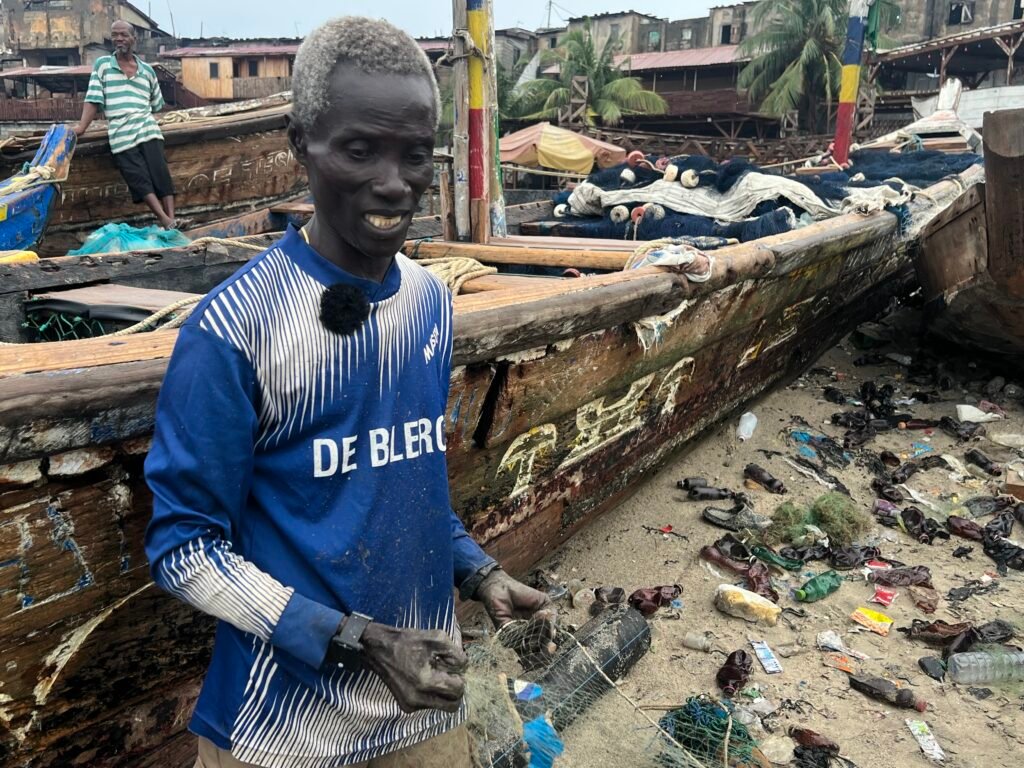
For nearly four decades, Paa Ekow has relied on the ocean to support his family. But he believes industrial vessels operating illegally are stripping local waters of fish and threatening the survival of artisanal communities.
“The big industrial vessels are making life very difficult for us. Some of them fish in areas meant for canoe fishermen, and others use illegal methods that catch everything including juvenile fish,” he said.
Ghana’s coastline sits within one of West Africa’s most heavily pressured fishing zones, where local communities say competition for dwindling fish stocks is intensifying.
According to the United Nations Food and Agriculture Organization, IUU fishing removes up to 26 million tonnes of fish from the oceans every year, costing the global economy billions of dollars while undermining food security and sustainable livelihoods. Coastal African states alone lose an estimated 2.3 billion dollars annually to the practice.
Experts say the problem goes beyond lost income. It also weakens governance and accelerates ecosystem decline.

“IUU fishing is a way of cheating the system,” said Ross Wanless, Electronic Monitoring Systems Specialist at the FAO. “Those vessels don’t follow the same rules. They cut costs, make higher profits, and governments lose tax revenue. And coastal
communities lose fish they should be entitled to catch, and ecosystems are getting destroyed.”
Ghana is one of Africa’s highest seafood-consuming countries, with demand reaching about 1.2 million tonnes a year. But annual production stands at roughly 600,000 tonnes, deepening pressure on local stocks.
Scientists warn that without stronger enforcement, fish populations could take decades to recover.
That concern has now reached the international stage.
At the 11th Our Ocean Conference in Mombasa, Kenya, 15 countries including Ghana endorsed the newly adopted Mombasa Declaration, a push to improve transparency in fisheries by strengthening data collection and sharing vessel information. A related global charter outlines measures aimed at improving accountability in ocean governance.

More than 100 governments, businesses and civil society organizations also announced commitments worth 6.4 billion dollars for ocean conservation and
sustainable fisheries.
Kenya said it would invest 200 million dollars in electronic monitoring systems for industrial vessels to track illegal fishing activity in its waters.
Ghana has not made any financial commitments according to the commitments outcome report. Officials did not provide estimates for the cost of expanding electronic monitoring to trawlers and artisanal canoes or say whether the programme would be financed through domestic resources, donor support or a combination of both. The government said only that the rollout would happen in phases.
Minister for Fisheries and Aquaculture Emelia Arthur said Ghana has strengthened its legal and institutional framework to address illegal fishing, pointing to new
enforcement measures that bring multiple agencies into a coordinated system.
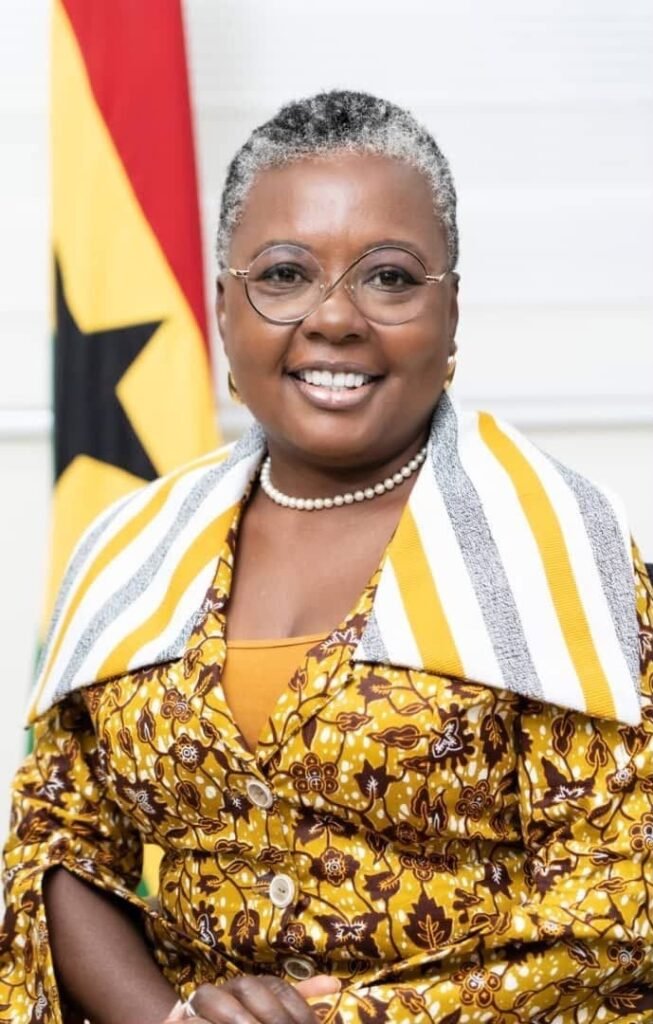
“We have passed a new law that allows us to decisively deal with IUU,” she said. “We have strengthened the fisheries enforcement unit, which brings together the Ghana Navy, Ghana Police, Immigration, and the Fisheries Commission to ensure
compliance and enforcement.”
The government is also investing in electronic monitoring systems (EMS) designed to improve vessel tracking and close loopholes that allow repeat offenders to evade detection.
“When a vessel is coming to operate in our waters, we must know who is behind it and its history,” the minister said. “Some vessels operate illegally in some waters and then run away to go into other waters. We do not want to encourage all that.”
Analysts say such technology could transform fisheries management by replacing unreliable paper records with real-time digital information.
“Government systems for managing fisheries have been built on extremely bad data,” said Wanless. “Electronic monitoring fundamentally changes that. It brings new streams of vast quantities of really high quality data. And that’s an enormous change
for an entire department to undergo”.
Ghana’s fishing sector includes over 200 semi-industrial boats, and more than 14,000 artisanal canoes, along with 54 industrial trawlers and tuna vessels.
Electronic monitoring is already in use on tuna vessels, but has not yet been extended to trawlers or canoe fisheries.
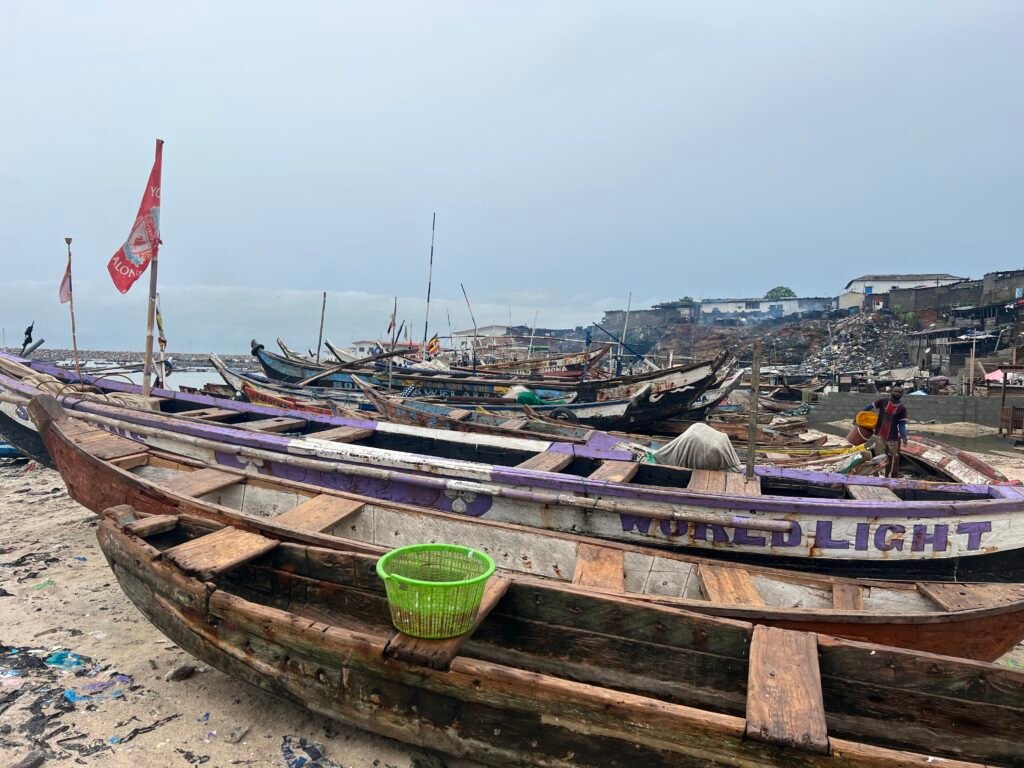
At the same time, concerns remain that some artisanal fishers also engage in illegal practices such as light fishing, dynamite fishing, and the use of chemicals including DDT.
Marine governance analysts say low-cost monitoring systems for small-scale fisheries already exist, but scaling them would require both funding and political will. Most canoe fishers operate on thin margins and cannot afford such technology without state or donor support.
For now, the government says it will begin with re-registering and licensing artisanal canoes before expanding monitoring systems further.
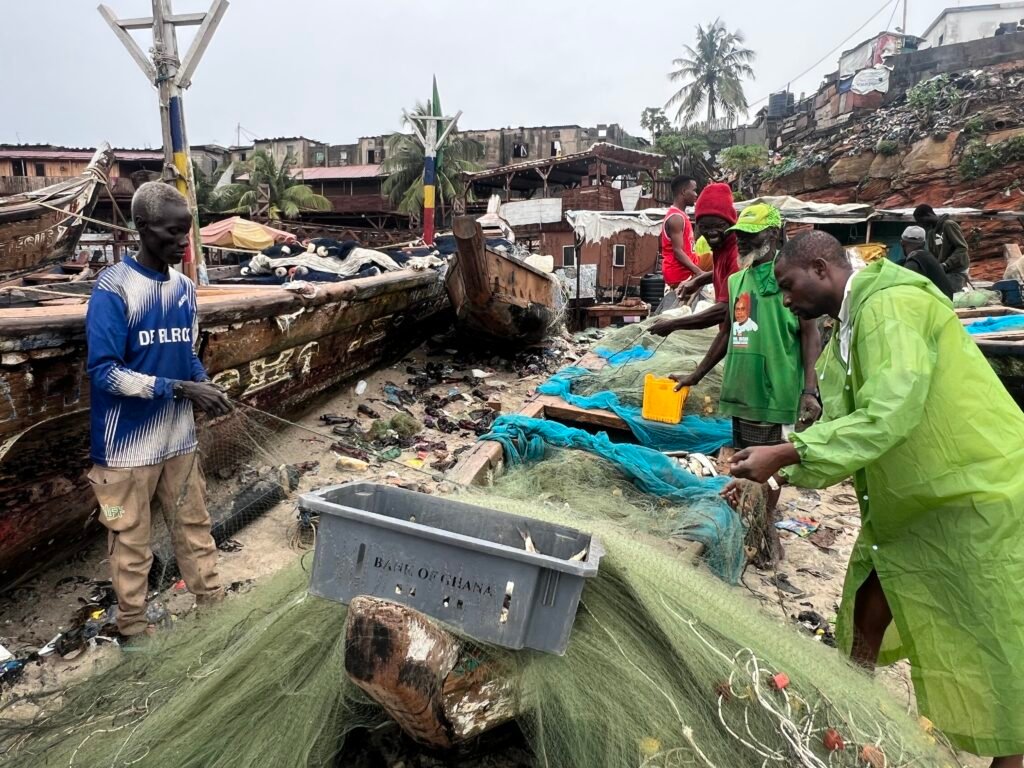
Meanwhile Fisherman Paa Ekow said fishermen had heard promises before. What they want now is action to restore fish stocks and protect their livelihoods.
“If the government can stop the illegal fishing and protect our waters, then maybe our children can continue this work,” he said.
As the boats settle on the sand and the tide shifts again, the future of Ghana’s coastal communities remains uncertain – caught between global pledges, national policy, and a sea that is giving less with each passing year.
Story By Nabil Ahmed Rufai |Freelance Journalist.
Note: This story was produced as part of the 2026 Our Ocean Conference Fellowship organized by Internews’ Earth JournalismNetwork.


