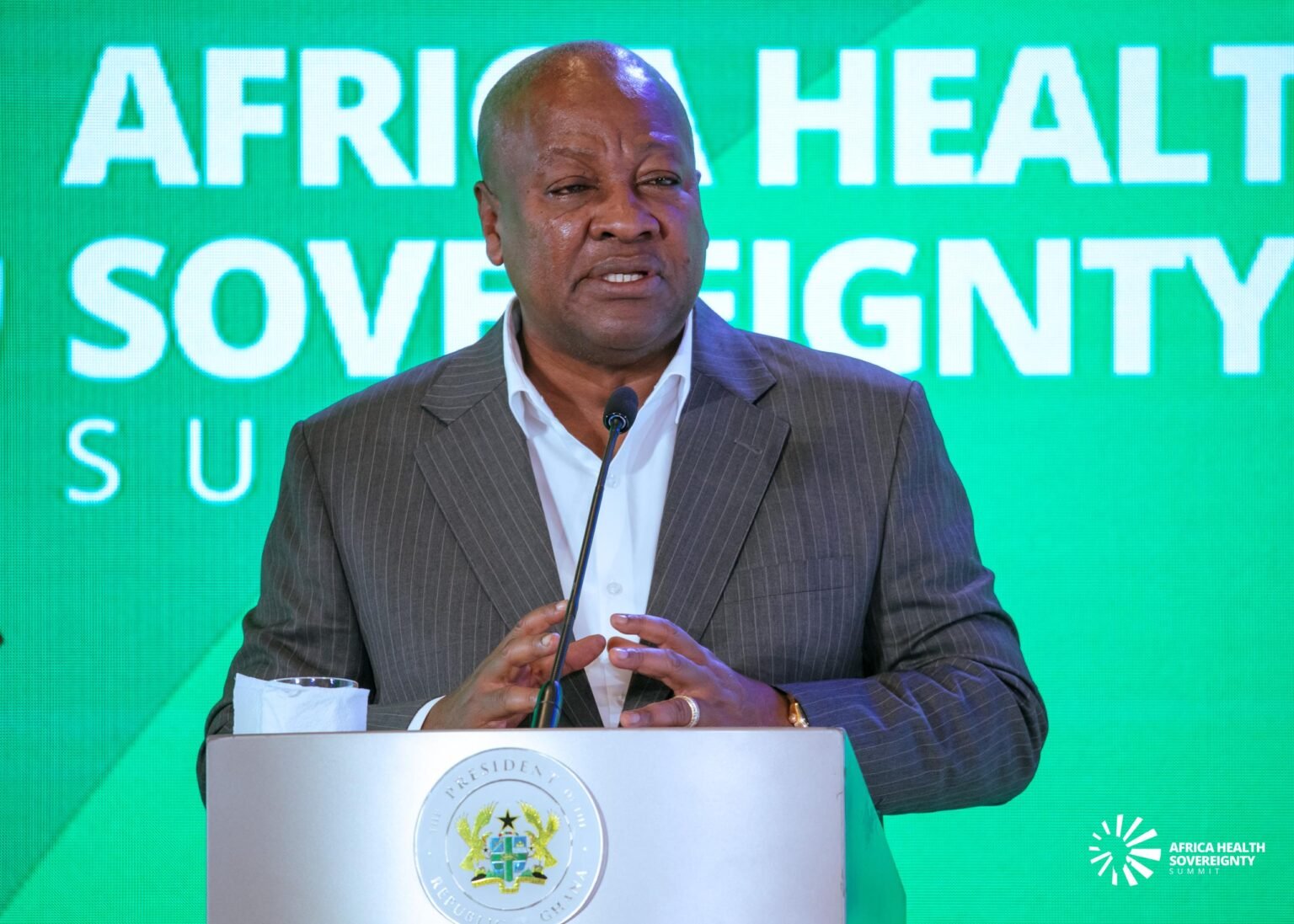
President John Dramani Mahama has delivered a scathing critique of the current global health governance structure, describing it as outdated, unjust, and unfit for 21st-century realities. He called on world leaders to work with Africa to design a new, more democratic health architecture that reflects the needs, voices, and innovations of the continent.
Addressing the opening of the Africa Health Sovereignty Summit in Accra, President Mahama said the world is being shaken by overlapping crises; ranging from wars and pandemics to climate shocks and economic volatility; but global health systems remain rigid and exclusionary.
“The world has changed, but global health governance has not kept pace,” he stated.
“We are called to redesign the architecture that has, for too long, excluded Africa’s voices, needs, and innovations.”
He pointed out that although global partnerships like GAVI and the Global Fund have contributed to major health gains; such as halving child mortality and reducing maternal deaths; these successes are now under threat.
Citing Ghana’s own experience, he said:
“In 2023, global development assistance declined sharply. Africa felt the shock immediately; maternal health programmes halted, vaccine supplies delayed, and medicines disappeared from clinic shelves. In Ghana, our community-based health delivery model, the CHPS programme, was brought to its knees by abrupt funding withdrawals.”
President Mahama argued that what the continent faces is more than just a funding crisis.
“It is a crisis of imagination, a vacuum of solidarity, and a deep failure of shared responsibility. Above all, it is a question of sovereignty; the right of African nations to determine their health priorities, marshal their capacities, and lead with their own vision.”
Declaring that “Africa must no longer be the patient,” he urged the international community to support a shift in global health governance that puts Africa at the center as “the author, the architect, and the advocate of its health destiny.”
Mahama also emphasized the need to treat health as an economic investment, not a cost. Quoting World Health Organization data, he noted:
“Every $1 invested in health resilience yields up to $4 returns. This return is even greater in Africa, where youthful populations represent latent economic dynamism.”
To support this transformation, he announced the creation of a Presidential High-Level Task Force on Global Health Governance, and the SUSTAIN Initiative – a platform to align national budgets with health priorities, mobilize African resources, and foster cross-border accountability.
“Together, let us reset the moral compass of global health. Build systems that generate wealth, uphold dignity, and expand purpose. Let us not only reimagine our future—let us own it.” He concluded.
The Accra summit brought together African Heads of State, global health experts, and policy leaders to chart a new path toward health sovereignty on the continent.
Source: Starrfm.com.gh