Misconceptions and myths about menstruation continue to persist among adolescent girls due to inadequate reproductive health education for young people, allowing misinformation and stigmatization to thrive.
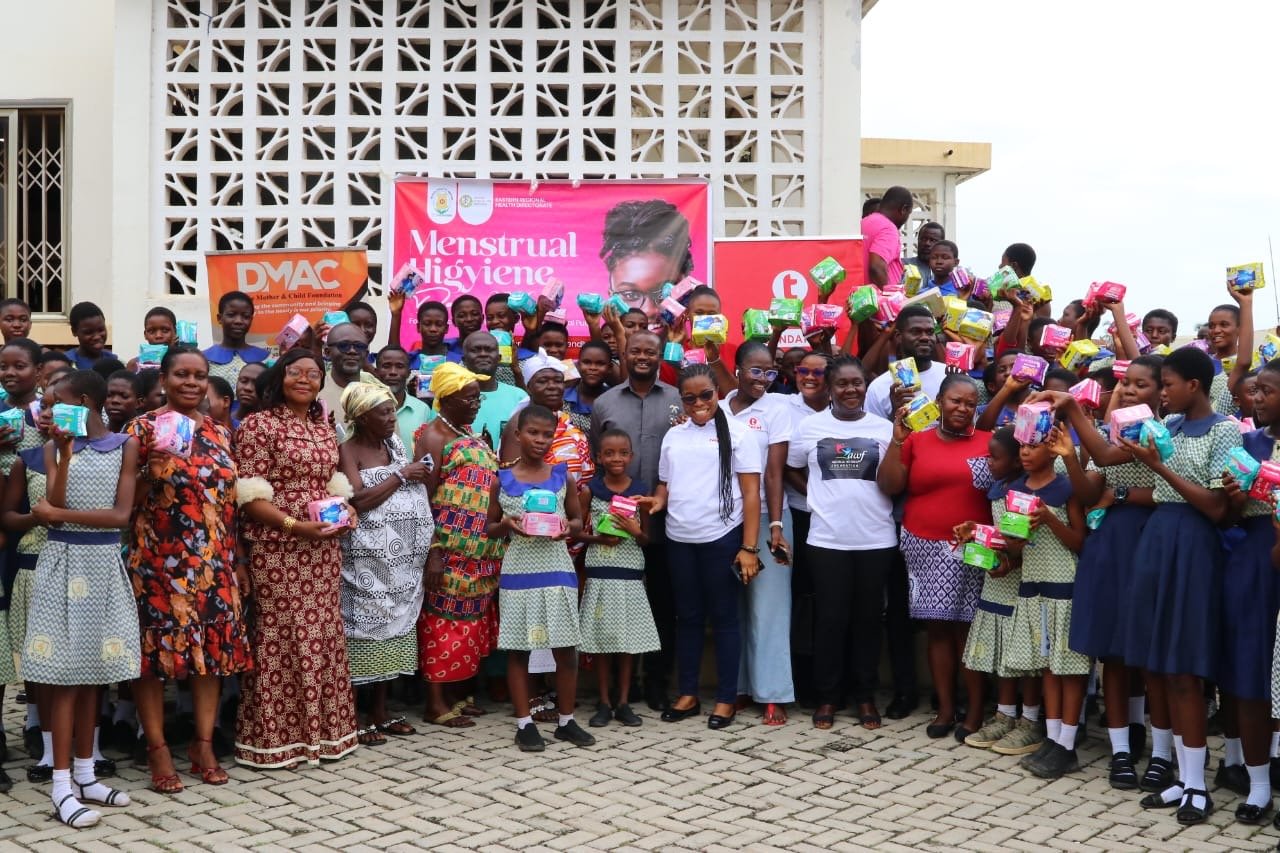
At the celebration of this year’s World Menstrual Hygiene Day on Thursday, May 28 2026 at Koforidua Asokore, organized by the Eastern Regional Health Directorate and the Ghana Education Service, facilitators used the occasion to address several misconceptions surrounding menstruation.
Among the myths discussed were beliefs that menstruation is unhygienic, that menstruating girls and women become unfit to cook or perform normal duties, and misconception that menstruating women become a curse.
Some adolescent girls who participated in the programme revealed that they previously believed menstruation was a sign of witchcraft.
“They said when you menstruate it means you are a witch but now i have seen that when you menstruate it means you are grown up and you don’t have to fear, you don’t have to be embarrassed.” One of the female students said.
Another also recounted, “I heard that if you have your period you are a witch.So i thought i am also a witch until i came here and then i head that it is all some kind of myth.”
“I have a friend who is from a different tribe the person actually told me that with their tribe you cant cook when you are menstruating”. Another also said.
Public Health Nurse Edith Asiedua of the Eastern Regional Health Directorate said awareness creation on menstruation would now be extended to parents and communities to help address misinformation at home and within communities.
Eastern Regional Girls Education Officer Patricia Brago Gyamfi disclosed that government intends to procure reusable sanitary pads to complement the sanitary pads currently being distributed to adolescent girls.
“the free sanitary pad distribution is a timely intervention made by the government because we all know that pads are expensive these days and most parents cannot afford. And when girls are menstruating and they are not getting their pads, they absent themselves from school.The fact that they are even introducing the reusable pad is also a plus because the numbers that the girls get, I mean the pads may not be enough for them but with the reusable you can use it and wash it and still use it again”.

The Municipal Chief Executive for New Juaben North, Samuel Adongo, supported this year’s celebration with quantities of sanitary pads.
He also announced plans by the assembly to construct modern toilet facilities and girls’ changing rooms in basic schools across the municipality.
“If you go to most of the basic schools, the toilet facilities there are in a very bad state that it’s not even accessible at all. So the New Durban North municipality have taken it upon itself to put it on our budget this year to see how best we can fix all the washrooms within the municipality. I mean the basic schools washrooms and put it at a state that will be more convenient and more comfortable for our girls so that when they are in their month they will have a very conducive place that they can actually maybe you know change their pads and all that” said the MCE.
Other key issues raised during the programme included improper disposal of sanitary pads and the need for boys and men to be actively involved in menstrual hygiene education and support.

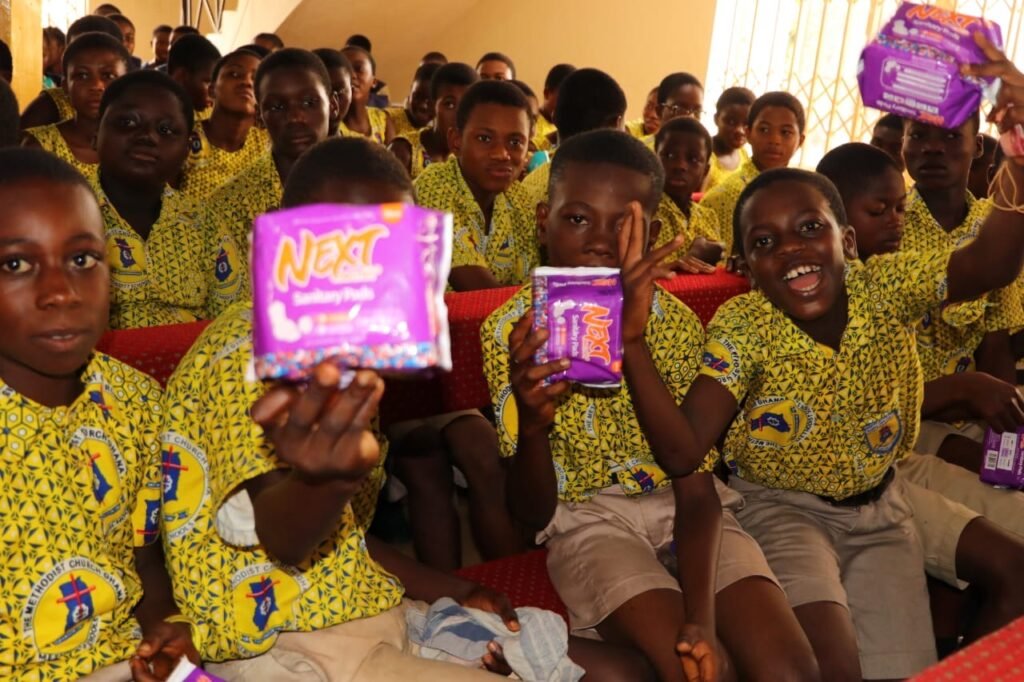
This year’s World Menstrual Hygiene Day celebration received support from several organizations including Telecel, DMAC Foundation, the New Juaben South Municipal Assembly, among others which donated sanitary pads for distribution to both male and female students present at the event.
Soure: Starrfm.com.gh