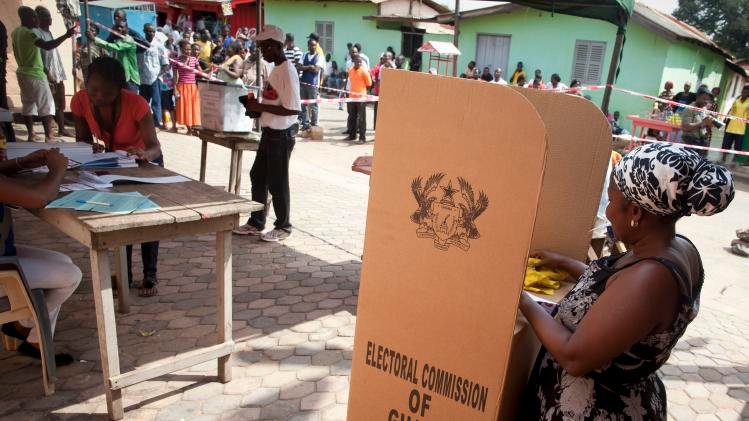
In about thirty-four months, millions of Ghanaians will march to the polls to cast their ballot for the country’s next president. The race for flagbearer will soon start rolling as the two major parties, New Patriotic Party (NPP) and National Democratic Congress (NDC) put their best candidates forward. Since the 4th republic (transition from military rule to democracy), 8 general elections have been held, with all following peaceful transitions of power.
The stability of our system has established Ghana as a bastion of African democracy. The Economist Intelligence Unit (EIU) ranks Ghana as the 6th most democratic government in Africa. While the continuity of governing has proven not to be an issue, governing has. Ghana is the first sub-Saharan African country to attain independence from colonial rule-yet we remain one of the poorest countries in the world. The World Bank recognizes Ghana as one of the Heavily Indebted Poor Countries (HIPC) with a reported Gross Domestic Product (GDP) value of 58.00 billion USD (2021)-a drastic plummet from 2020’s 72.35 billion USD. Per World Populations Review, Gross National Income (GNI) per capita stands at $2,230.
Nigeria’s independence (1960) from colonial rule came after Ghana’s-yet, Nigeria remains the largest economy in Africa. Their 2021 GDP estimates stands of 440.00 USD Billion, according to tradingeconomics.com. While some can attribute their success to oil extraction, Ghana isn’t shy of natural resources either. With minerals ranging from diamonds, manganese ore, bauxite, and oil, were the second largest exporter of cocoa in the world. And despite being Africa’s number 1 gold producer, poverty remains a problem. On the global landscape, World Life Expectancy ranks Ghana #155 in life expectancy (65 years old).
If there is anything our electoral process has taught us, it is that our orthodox approach in electing leaders is futile.
With the race for flagbearer a year away, party heavy weights from both sides are likely to land atop the general election ticket come November 2024. They will likely be candidates who’ve chased the presidency for over a decade, a long resume in public service sans any signature achievement. The race also puts voters in a complicated spot; leaving us to choose between a ruling government who continues to sink the economy or a party whose leadership lead to the country’s first one-term president.
The governing party, NPP, has been plagued by scandals of corruption allegations since assuming power in 2016. In 2018, an energy deal gone wrong led to the high-profile firing of then energy minister, Mr. Boakye Agyarko by President Akuffo-Addo. Revolving the AMERI Power Deal, Ghana would assume full ownership of the 250-megawatt (MW) power production plant from the African and Middle East Resources Investment Group, AMERI Energy. Per experts, the deal was poorly brokered and calls for revisions are what led to Mr. Boakye’s firing. Key players involved included close advisors of the president. It won’t be the only scandal to taint the administration. Others included the suspension of Public Procurement Authority (PPA) Chief Executive Officer (CEO), A.b Adjei over ethics violations, reported unlawful sales ($25,000 to $100,000) of seats by the Ministry of Trade and Industry for the Millennium Excellence Awards, a GHC135,000 end-of-year staff party in 2017 by Former Ghana Maritime Authority (GMA) head, Kwame Owusu. Multiple negative headlines continue to follow as faith in NPP’s leadership wanes. It is not unreasonable to infer that the defining legacy of their reign is an administration embedded in corruption allegations-some proven true.
Former President Mahama’s governing tenure from 2012 to 2017 did not elude scandals either. Multiple government contracts were awarded to his brother, Edward Mahama; drawing charges of nepotism and bias. During the final lap of his brother’s presidency, Edward secured a government contract to build a 25-kilometre Daboya-Busunu road in the North Gonja district. Nonpartisan media outlets and government officials reported Edward’s close involvement in the infamous AMERI deal. Prior to NPP’s takeover, the deal was first initiated by Mahama’s government. Valued at $220million by independent experts, negotiations were reached in upwards of a whopping $500million. Questions of embezzlement followed. Final approval (during NPP’s rule) of the AMERI deal crumbled under bipartisan deliberation and was reached via executive order.
As President Akuffo-Addo prepares to wind down his second term, his successor faces a tough battle ahead. Frustrations continue to grow over a system that simply doesn’t work. In 2021, Ghanaians across all areas and industries took to the streets during the #FixTheCountry protest to demand solutions to extreme hardships. Some of the President’s prominent appointees have been under public scrutiny over noncompliance and abuse of power. Bank of Ghana’s governor, Dr. Ernest Addison has not appeared before parliament (for oversight) in over two years -breaking precedent of the office. Under Akuffo-Addo’s government, over 9 banks have collapsed. The MP for Central Bolgatanga, Isaac Adongo, has called for the firing of finance minister, Ken Ofori-Atta over mismanagement of the economy. The introduction of 1.75% e-levy on mobile money transactions was met with firey opposition from leaders of both parties and the general public.
If history and tradition is any indication of 2024, Akuffo Addo’s heir is likely to be his trade minister, Mr. Alan John Kwadwo Kyeremanteng. Reports about his candidacy seem to pose more reality than rumour. In a not-so-subtle endorsement during his visit to Manhyia Palace, President Akuffo-Addo informed Otumfuor of Alan’s interest in taking over his job and commended the trade minister on his current position. Addressing a gathering of NPP insiders this year, Alan informed party executives that it is time for others to sacrifice for him to lead-citing his concession (to Akuffo-Addo) of the 2007 primary elections. Widely known as Alan Cash, Mr. Kyeremanteng has been with the NPP (in key roles) since its inception in 1992; serving on their National Executive Committee from 1992 to 2001. His first cabinet position came in 2003, when he was appointed Minister of Trade and Industry. Since then, the potential frontrunner has enjoyed over a decade of service in high-level government positions. He was Ghana’s Ambassador to the United States from 2001-2003.
Like most high-profile Ghanaian politicians, the 2024 contender’s career is revelled more in titles than tangible achievements. From serving on prominent international advisory boards, a TIME Magazine recognition, a World Trade Organization (WTO) Director General nomination, Mr. Cash has built an international reputation that rivals former presidents. Despite occupying a position he already held over a decade ago, Ghana has yet to secure a landmark trade deal under his leadership.
Kyeremanteng first sought the presidency in 2007, coming in as runner-up (with 32.30%) to Akuffo-Addo (47.96%), who lost in the general to Late President Mills. He took another shot at flagbearer in 2010. This time, losing in a landslide to Akuffo-Addo who swept 77.92% of the votes. In 2014, he lost again to the current president, polling at 7.79% in a superdelegates contest. The problem with chasing the presidency for 15 years, particularly in Alan’s case is that, it begins to bleed into questions of whether the ambition is self-serving or a genuine desire to pursue change. That latter becomes a tough sell for Mr. Cash. For all three failed attempts, Mr. Kyeremanteng has occupied a high-level government position. If his track record during these appointments preceded his name recognition, voters would be more likely to choose him the following cycle-yet, Kyeremanteng performed worse each time he ran. Electing the trade minister will only extend his decades-long career in public service and bolster a lacklustre record. Perhaps the only significant difference this time will be that his once unbeatable opponent, Nana Addo, will no longer be eligible to seek the office.
The NPP has a history of electing failed presidential candidates to lead future party tickets. Former President Kufour ran in 1996 before defeating late President Rawlings in 2000. Akuffo-Addo has run for President four times. If Mr. Kyeremanteng decides to run, it will be his fourth attempt. Voters have sufficient reason to reject the allure of decades-on-decades in public service resume as it has proven to be a vanity power lust. The weakness of NPP’s presumptive frontrunner makes a Mahama comeback even more plausible.
Former presidents usually go quiet in the sun, unless you’re Mr. John Mahama. Since his 2016 defeat, he’s made dozens of media appearances and remains NPP’s most famous critic from the opposition. Besides contesting the results of the 2020 election, Mahama continues to fire at the Electoral Commission with charges of unfair processes. In an interview with Joyfm, he accused the commission of conducting “one of the worst elections during 2020.” His 2021 “Thank You Tour” doesn’t help when attempting to argue the case against Mahama’s inevitable candidacy. A firm standing among loyal party voters makes him almost impossible to beat. The general election however, is a different story.
His advantage isn’t so much of his doing. Since establishing itself as a democracy, Ghana has never elected a party to a third term, particularly one with an inactive response to poverty. In October 2021, Akuffo-Addo’s own finance minister, Ken Ofori-Atta, in an address to tertiary graduates stated that the “public sector was full, and that young graduates would need to start their own jobs.” While a predicament like that probably holds true for some countries, it’s a poor reflection of any government to make such statement-especially in a country where public funding for small businesses simply does not exist. This list of failed promises by Akuffo-Addo continues to lengthen. From pledging to spend $1 million a year on infrastructure in each of the 275 parliamentary constituencies via dams, factories, and roads, to walking back on his promise to build a harbour in the Central Region. Mahama has a list of failed agendas by the ruling party to effectively hit against them. Even with these advantages, Mahama’s biggest obstacle in 2024 will be Mahama. He’s Ghana first and only one-term president. His proven ability to run an unsuccessful campaign, a governing tenure that posed an economic disaster makes his candidacy a risky gamble.
Electing these familiar faces could be characterised as picking between the lesser of two evils or a personal assessment of who is likely to cause less damage to an already battered economy. The case of an unconventional candidate couldn’t be more dire. If 64 years of independence has taught us anything, it is that the type of leaders we elect need to change. Below is a list of formidable candidates who could bring new perspectives, and experiences to the presidency:
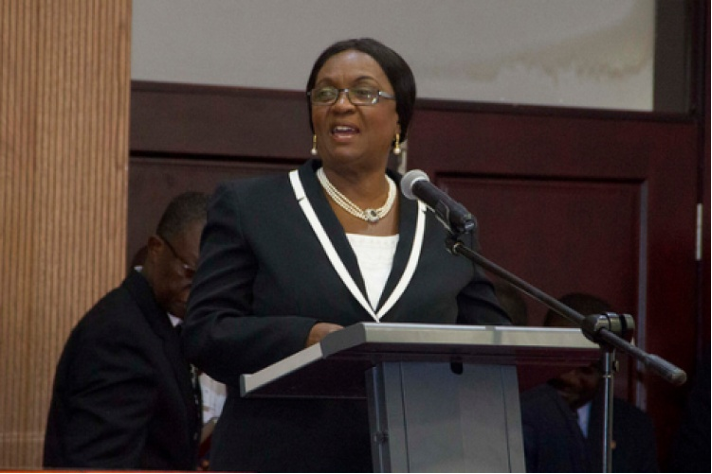 Justice Georgina Theodora Wood
The legendary jurist is a battle-tested public servant who has proven her ability to be nonpartisan in issues of public interest. A member of the current Council of State, Mrs. Wood has five decades of public service experience. From her days as a public prosecutor, her time as District Magistrate, then judge (Circuit and High Courts), a sessional Justice of the Supreme Court of the Republic of The Gambia, to her historic appointment to the Supreme Court of Ghana. Besides being the country’s longest-serving Chief Justice, Wood’s most significant accomplishment is perhaps her contribution to advancing Alternative Dispute Resolution (ADR) in our legal system: settling disputes without litigation. If her legal career is any indication of her could-be presidency, it is that Madam Chief Justice will unite a country’s leadership that is deeply divided by partisan interests.
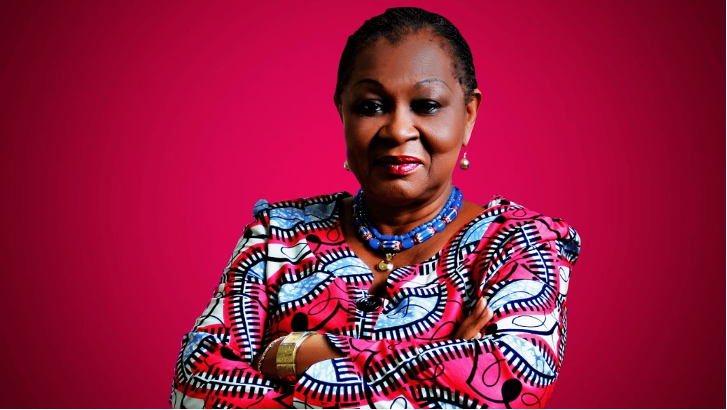 Madam Joyce Aryee
The former Chief Executive Officer of the Ghana Chamber of Mines was once Ghana’s Minister of Education (1985-1987) and later, Minister of Local Government (1987-1988). Her time at the Ghana Chamber of Mines led to rigorous government regulation of companies involved in mineral exploration in Ghana. With 40 years of public service under her belt, Madame Aryee is a well-known maven in the extractive industry. If elected president, she could use her knowledge, experience and relationships in the field to transform Ghana’s rich extractive industry for the better.
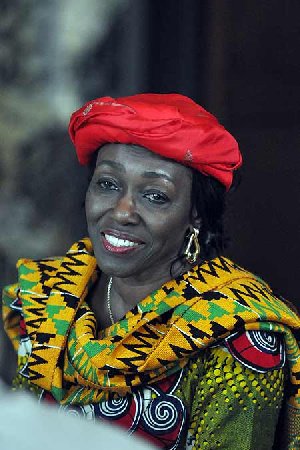
Nana Konadu Agyeman-Rawlings
It is not uncommon for political spouses to seek the top job themselves. Former US Secretary of State Hillary Clinton won the popular vote in the 2016 US elections despite losing more state electoral votes (necessary to win the White House). Former Argentina President, Cristina Fernandez de Kirchner succeeded her late husband President Nestor Kirchner after his death in 2007. First ladies have proven to be influential advisors to presidents, with some seamlessly transitioning into the role. Mrs. Rawlings’ feat is beyond that. Her unbridled advocacy for women’s issues dates back to the 1980’s. Her 1989 31st December Women’s Movement inauguration marked the first time a Ghanaian First Lady unapologetically took on women’s issues on a large public scale. The organisation focused on improving the self-sufficiency of women through income generation and savings tips. It also focused on improving women’s health and education through supplies of resources and teachings that improved their literacy. She also openly encouraged women to get involved in their electoral processes. Mrs. Rawlings became the mouthpiece for Ghana’s adoption of “Intestate Succession Law”- which recognizes women as inheritors of spousal assets. Should she run, Mrs. Konadu will undoubtedly be the feminist candidate; pushing issues like jobs, family care, maternal and children’s health at the forefront of issues. Her 19 years as First Lady to Late President Rawlings will come with insights no other person has.
Nana Aba Anamoah
One of her most widely known stories is of her meeting a street hawker and changing his life with a job offer at GHOne tv. Similar stories have followed as the ace broadcaster continues to build a reputation on investing in talent and pushing the careers of established names in media today. From GHOne’s Emmanuel Adjabeng to Serwaa Amhiere, Nana will definitely be the jobs candidate should she run. Time and time again, she has proven that the best investment a country can make is through its people. In her own way as General Manager of GHOne TV and Starrfm, Anamoah continues to expand opportunities for today’s youth through her hiring and programming.
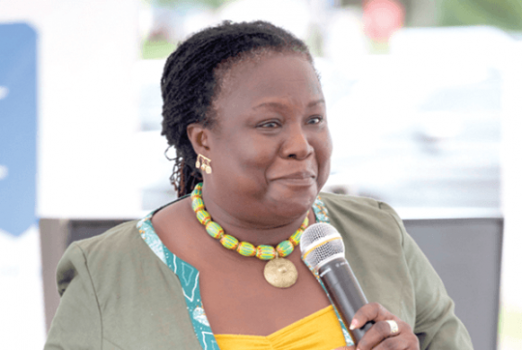
Professor Audrey Gadzekpo
Professor Gadzekpo takes no prisoners when it comes to her fierce advocacy for human rights. During the highly controversial LGBTQ+ bill that sparked conversations across the country, Madame Professor advocated for civil discourse and argued on the principle of human dignity. That kind of steady temperament and leadership is needed in a country whose legislative house recently turned into a brawl venue. A teacher and well-known mentor among her students, Professor Gadzekpo is the dean of the School of Information and Communications Studies at the University of Ghana. She is widely known for her compassion and eliciting excitement among her students. Ghana’s education sector, from technology to science, Ghana could use a president whose career has been focused on educating generations of future leaders.
The biggest winners and losers of every election cycle are voters. Our livelihoods, and future depends on laws, opportunities, policies, and regulations that govern us with implications that can last a lifetime. If our approach to electing the kind of leaders has persisted the same problems that are used as faux campaign promises, it is time for change-and change is 2024.
By: John Nana Blankson
The views expressed are that of the author