
The Deputy Minister of Health, Prof. Dr. Grace Ayensu-Danquah has expressed concern over Ghana’s persistently high maternal mortality rate, warning that unless urgent interventions are strengthened, the country could record more than 1,000 maternal deaths by the end of the year.
Speaking during a Maternal Mortality Action and Response Program (MMARP) engagement in Koforidua on Wednesday, Prof. Dr. Grace Ayensu-Danquah, revealed that Ghana recorded 955 institutional maternal deaths in 2025, representing 235 maternal deaths per 100,000 live births; more than three times the World Health Organization’s target of 70 deaths per 100,000 live births.
She noted that the figure excludes women who die outside health facilities or whose deaths are not properly classified as pregnancy-related, indicating that the actual number is even higher.
According to the Deputy Minister, maternal mortality remains one of the most important indicators of the strength of a country’s healthcare system because it has far-reaching consequences for newborn survival, child development and family welfare.

Prof. Ayensu-Danquah said preliminary data from the Ghana Health Service shows maternal deaths from January to May 2026 are already higher than the same period last year, underscoring the need for urgent action.
She explained that the MMARP initiative forms part of the government’s Presidential Initiative on Maternal Mortality Reduction, being implemented in collaboration with the United Nations Population Fund (UNFPA), to develop a coordinated national roadmap for tackling maternal deaths.
The Deputy Minister disclosed that the Eastern Region ranks fourth among 11 regions with the highest number of maternal deaths.
However, she clarified that many of the deaths involve referral cases sometimes from other regions and should not be interpreted as a failure of the region’s health system alone.
“We are not here to apportion blame. We are here to understand why, despite the numerous investments, policies, training and interventions over the years, maternal mortality remains unacceptably high,” she said.
Eastern Regional Director of Health Services, Dr. Damien Punguyire, welcomed the Ministry’s intervention and described the field-based assessment as timely and necessary.

He disclosed that the Eastern Region has recorded 34 institutional maternal deaths so far in 2026, compared to 41 deaths during the same period in 2025 and 38 deaths in 2024.
While describing the decline as encouraging, Dr. Punguyire stressed that every maternal death represents a family tragedy.
“Thirty-four is still 34 mothers who left home pregnant and did not return. Progress is not the same as success. Every number represents a family that has lost a mother and a child who may grow up without maternal care,” he stated.
He said the region will use the two-day engagement to highlight both its successes and persistent challenges, including emergency transport, human resource gaps, referral systems and social barriers that continue to delay access to quality maternal healthcare.
The MMARP exercise is expected to guide targeted interventions aimed at reducing maternal deaths and strengthening Ghana’s healthcare delivery system.
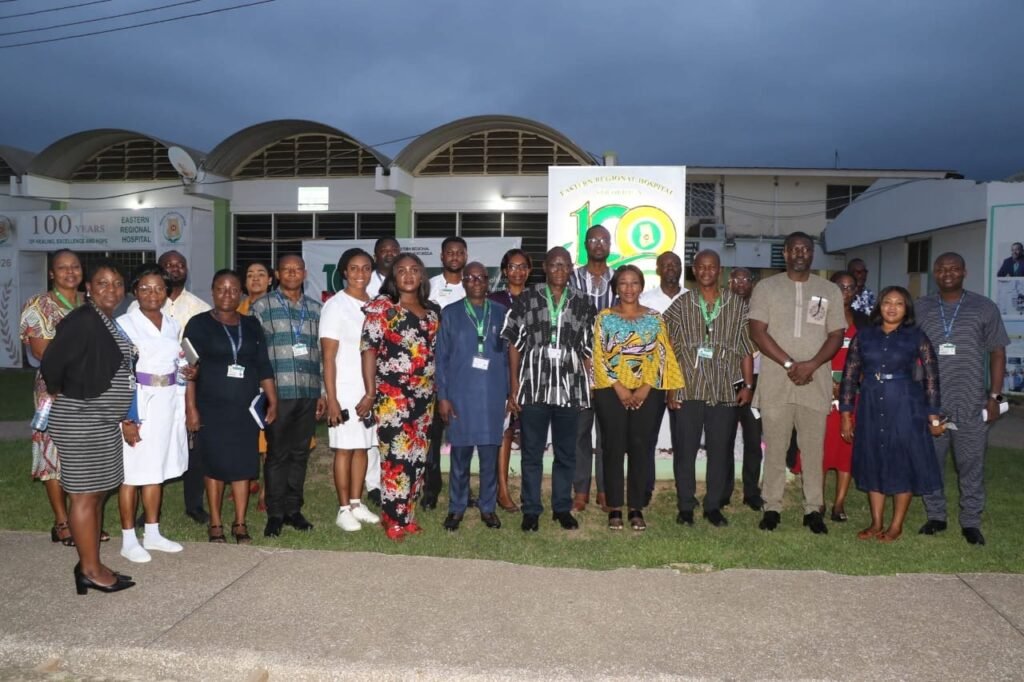
The team visited the Omanhene of New Juaben Traditional Area Daasebre Kwaku Boateng III, and later to the Eastern Regional Hospital.
Source: Starrfm.com.gh