By using this site, you agree to the Privacy Policy and Terms of Use.
Accept
Starr FmStarr FmStarr Fm
  • Home
  • Election Hub
  • General
    GeneralShow More
    President Mahama reshuffles ministerial team, nominates Zanetor Agyemang-Rawlings and Mahama Ayariga
    August 7, 2026
    High Court restrains Omanhene of Anum from land sales, rent and royalties
    August 7, 2026
    Wontumi files application for bail pending appeal; hearing set for August 19
    August 7, 2026
    Atiwa East DCE commends Education Minister for assuring response to Sekyere SDA SHS infrastructure crisis
    August 6, 2026
    Education Ministry condemns violent incident at Obuasi Senior High Technical School, orders investigation
    August 5, 2026
  • Business
    BusinessShow More
    Gideon Boako: IMF warns Ghana’s gold dependence leaves economy dangerously exposed
    August 5, 2026
    Genser Energy buys back Oppenheimer’s 40.4% stake as investor exits after five years
    August 5, 2026
    Gideon Boako cites IMF report, questions GoldBod over $1.7bn gold programme losses
    August 5, 2026
    IMF Report shows Ghana must move beyond economic stability to structural reforms – Gideon Boako
    August 5, 2026
    Global Mandate Economic Summit 2026 to bring diaspora investors, global leaders to Accra
    August 4, 2026
  • Politics
    PoliticsShow More
    President Mahama reshuffles ministerial team, nominates Zanetor Agyemang-Rawlings and Mahama Ayariga
    August 7, 2026
    Sammy Gyamfi threatens legal action over ‘false’ GH¢200m GoldBod allegations
    August 5, 2026
    IMF Report shows Ghana must move beyond economic stability to structural reforms – Gideon Boako
    August 5, 2026
    GH¢55m IMCCoD scandal: High Court freezes Miracles Aboagye’s 4 houses, 5 accounts
    August 3, 2026
    ‘It seems this government fancies burdening the Ghanaian taxpayer with more taxes’ – Gideon Boako
    August 1, 2026
  • Entertainment
    EntertainmentShow More
    MOLIY releases highly anticipated mixtape “BADDIES <3 MOLIY”
    July 31, 2026
    History made as 77: The Festac Conspiracy premieres to sold-out crowd in Zambia
    July 20, 2026
    X Lor opens new chapter as debut EP Tornado arrives on streaming platforms
    July 10, 2026
    Samsung Ghana powers culture and creativity at 2026 UG All Dance Carnival
    July 1, 2026
    Ghana Music Awards USA, WatsUp TV partner to amplify Ghanaian music on the global stage
    June 25, 2026
  • Sports
    SportsShow More
    Black Queens reach WAFCON quarter-finals after hard-fought draw with Mali
    August 7, 2026
    Black Queens suffer defeat as Cameroon book WAFCON quarter-final spot
    August 3, 2026
    Black Queens begin WAFCON campaign with convincing 2-0 win over Cape Verde
    July 30, 2026
    Black Stars
    Ghana at 2026 World Cup: Black Stars Show Promise but Miss Cutting Edge
    July 27, 2026
    Late Argentine comeback ends England’s dream, sets up World Cup final against Spain
    July 16, 2026
  • Technology
    TechnologyShow More
    AngloGold Ashanti Iduapriem commissions $750,000 AI and Smart Systems Centre at UMaT
    July 29, 2026
    Sambus Geospatial MD calls on Ga Mantse ahead of ESRI Conference West Africa 2026
    July 28, 2026
    GIMPA Tech Fair held as Samsung brings ‘Awesome Experience’ to event
    July 1, 2026
    Siniat joins ITALKOL and PIXEL PAINTS portfolio as ITALKOL celebrates a decade of industry impact
    June 23, 2026
    Child Rights International calls for ban on social media use for children under 17 in Ghana
    June 20, 2026
  • International
    InternationalShow More
    Korea commits US$38 million to strengthen Digital STEM education in Ghana
    July 8, 2026
    QNET joins EOCO, INTERPOL regional workshop to strengthen cross-border action against human trafficking and fraud
    July 8, 2026
    High Court dismisses Abu Trica’s emergency application to halt extradition to US
    July 6, 2026
    Ghanaian students abroad to convene global forum on national development
    July 5, 2026
    Alleged romance scam: Lawyers for Abu TRICA file emergency application to halt extradition to US
    July 3, 2026
  • Factometer
Search
© 2024 EIB Network Ltd. All Rights Reserved.
Reading: Africa needs more female leaders to drive equitable pandemic recovery efforts
Share
Notification Show More
Font ResizerAa
Starr FmStarr Fm
Font ResizerAa
  • Headlines
  • Election Hub
  • General
  • Politics
  • Sports
  • Business
  • Entertainment
  • Factometer
Search
  • Headlines
  • Election Hub
  • General
  • Politics
  • Sports
  • Business
  • Entertainment
  • Factometer
Have an existing account? Sign In
Follow US
© 2024 EIB Network Ltd. All Rights Reserved.
Editors PickFeatures

Africa needs more female leaders to drive equitable pandemic recovery efforts

Starrfm.com.gh By Starrfm.com.gh Published August 31, 2023
Share
SHARE

The pandemic has revealed and amplified existing inequalities around the world. Amidst lockdowns and economic shocks, African women have been hit particularly hard. According to the Brookings Institute, more than 70 per cent of women across the region now face insecurity. From job losses to increases in unpaid labour, a rise in domestic violence, and disruptions to education, African women have shouldered great mental, physical, and economic stress over the last year. But despite the pandemic’s outsized impact on African women, their voices are seldom included in recovery efforts, especially at the highest levels of leadership. If we hope to recover and reset to build more equitable societies, the voices of female leaders must be front and centre.

According to a recent survey by advocacy group Women Deliver and Paris-based research organisation Focus 2030, 7 of 10 workers on the frontline of the pandemic are female. Yet, women are left out of many COVID-19 response and recovery plans. Across the world, women only account for a quarter of decision-makers on COVID-19 response panels.

The situation in Africa isn’t much different.  For example, women constitute only a quarter of ministers of health across the region.

In my home country, Ghana, I served as a member of the National Democratic Party’s COVID-19 Technical Response Committee. Nevertheless, I could count the number of women involved in decision-making around pandemic response in either major party on two hands.

This reality is not unique to Ghana; it is the status quo across the region. That oversight will cost Africa in the long term. Because the impact of the pandemic has been gendered, it is critical that the voices of all affected parties—especially women—be heard.

In early 2020, only 14 countries worldwide had cabinets where women held at least half of posts. Only one—Rwanda—was in Africa. By now, it is no secret that Africa women are rarely included in decision-making, policy and government circles. And when women are included, they often suffer severe harassment.

According to a 2016 study, four in five women parliamentarians have experienced psychological violence linked to their job, one in four physical violence and one in five sexual violence.

I know this firsthand: as a parliamentary candidate in Ghana’s recent elections, I experienced an avalanche of discrimination with bitter criticism of everything from my makeup to my medical qualifications, despite being a board-certified surgeon.

This vitriol is not only a threat to women’s safety but a deterrent that dissuades qualified female candidates from running in local and national elections alike.

We have to address the roadblocks that discourage women from taking office because women in leadership are essential to help us build forward differently.

For example, we have seen firsthand how countries that have most successfully navigated the pandemic have been female-led.

During the Covid-19 crisis, the number of cases and deaths were systematically better in countries led by women.

In the United States, one study of U.S. governors found that states with female leaders had lower fatality rates. These findings are not unique to industrialised economies: in India, women-led councils have pushed for better access to clean water – critical for preventing the spread of the virus.

When we exclude or dissuade women from political office, societies lose. After all, research and anecdotal evidence suggest that where women are in leadership, governments are more likely to respond better to crises in ways that support socio-economic development.

Full and equitable participation of women in public life is essential to addressing structural inequality. My fellow countryman Kofi Annan once noted that “there is no tool for development more effective than the empowerment of women. No other policy is as likely to raise economic productivity or to reduce child and maternal mortality. No other policy is as sure to improve nutrition and promote health, including the prevention of HIV/AIDS. No other policy is as powerful in increasing the chances of education for the next generation.”

What he did not include in that statement is the reality that women are not only facilitators of peace but are also the backbone driving our development.

It is not just because of altruism; it is often because women have experienced developmental challenges firsthand: the face of poverty in Africa is female. These lived experiences might explain why studies show that female politicians are more likely to prioritise health, education, and related indicators.

Gender equality is undoubtedly a regional and global imperative. The African Union calls for “a more inclusive society where all the citizens are actively involved in decision making in all aspects.”

At the same time, the United Nations declares that all sustainable development goals hinge upon the achievement of gender equality.

But as we navigate COVID-19 recovery, we need more attention to gender equality than ever before. We have lost too much during this pandemic to let the carefully fought gains of recent decades disappear. To avoid regression, we must recognise that gender equality is critical to the ability of our societies and economies to recover and that diverse leadership is a crucial dimension of this journey.

Instead of seeking to go “back to normal”, it is time to introduce a “Great Reset” by promoting governance models that amplify women’s voices and engage women as decision-makers.

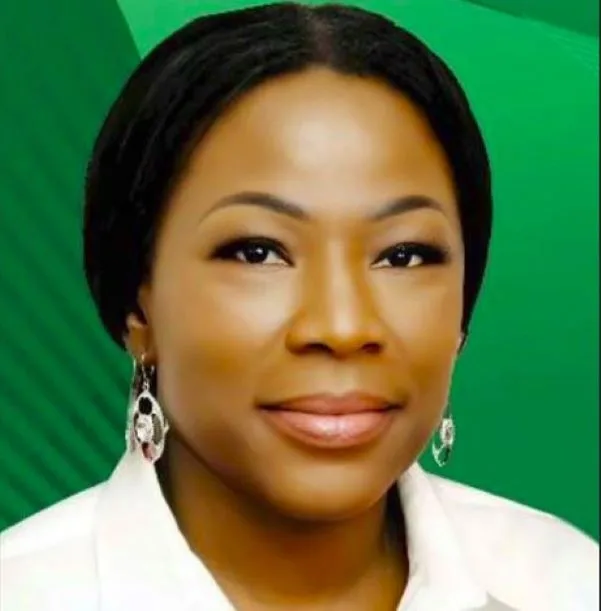
Dr. Grace Ayensu-Danquah, MD, MPH, FACS, is a US board Certified Surgeon Specialist, A philanthropist a Gender Advocate and current NDC Parliamentary Candidate for Ghana’s Essikado-Ketan Constituency.

Source: Dr. Grace Ayensu-Danquah

You Might Also Like

Opinion: KGL deal to deliver GH¢550m revenue boost for Ghana in 2027

The Insurance Gap Leaving Ghana’s Flood Victims to Rebuild Alone

Ghana’s Fishermen Look to Global Pact as Illegal Fishing Drains the Sea

As Plastic Chokes the Oceans, Funding to Fight It Is Drying Up

Reflections on Ghana and the Future it Deserves

TAGGED:Africacovid-19 pandemicDr. Grace Ayensu-DanquahfemalePANDEMIC
Share This Article
Facebook Twitter Email Print
Share
Previous Article Minority demo: Police go to court over routes impasse
Next Article MTN treats customers with movie screening “Retribution” at Silverbird Cinemas

Starr 103.5FM

Starr FmStarr Fm
Follow US
© 2024 EIB Network Ltd. All Rights Reserved.
newsletter icon
Join Us!

Subscribe to our newsletter and never miss our latest in news, podcasts etc..

[mc4wp_form]
Zero spam, Unsubscribe at any time.
adbanner
AdBlock Detected
Our site is an advertising supported site. Please whitelist to support our site.
Okay, I'll Whitelist
Welcome Back!

Sign in to your account

Lost your password?