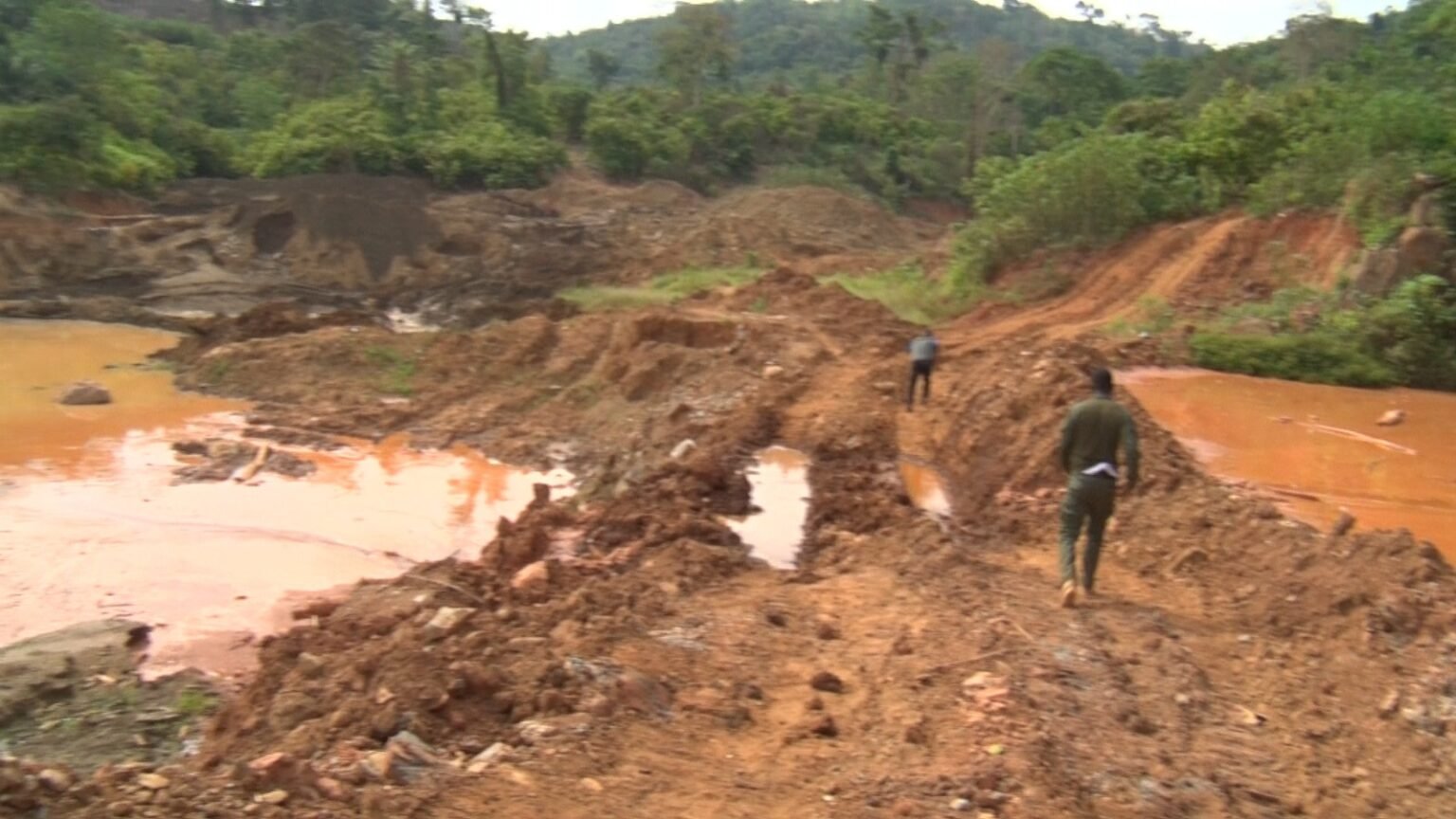
Eco-Conscious Citizens, a leading environmental advocacy group, has called on Interior Minister Mohammed Mubarak Muntaka to reconsider the decision to deport foreigners involved in illegal mining (galamsey) without trial.
During an engagement with the Ashanti Regional Police Command, the Minister announced that the government would deport such individuals instead of prosecuting them, citing the need to protect the environment and saving the country money.
“We have resolved as a new policy that for two things, you in our forest, whether doing galamsey or cutting our tree unlawfully getting yourself into fraud activities, that’s whether using computer or other fraud activity. For these two crimes, when we arrest any foreigner, we are not interested in prosecuting them. Our first option is to take them back to their country” the minister stated
……”the prosecutors within the police I have officially written to the Attorney General, we are not interested in prosecuting people who are destroying our environment and who are defrauding people across the globe. What we want is that we want to take them back into their country and then we’ll put them on the stop list, never to be able to come back to our country”.
Reacting to that on Morning Starr with Naa Dedei Tettey, the Coordinator for Eco-Conscious Citizens, Awula Serwah, disagreed with the policy, arguing that it will create an avenue for more foreigners to engage in galamsey.
She believes that punishment before deportation is necessary to serve as a deterrent.
She said, “See, if somebody is involved in environmental terrorism, destroying your forest reserves, poisoning the water bodies in the landscape, and what you are saying is that you can come to Ghana, do this, when we catch you, we just pay for your fare to go back to your country, no prosecution, you don’t spend any time in jail, there’s no restitution. All you do is that you go back to your country. And we all know how our borders are. You know what’s happening in the case of Aisha Huang. So, probably you can come back, maybe under a different name or whatever, I’m struggling to understand what kind of deterrent this will be.”
Serwah questioned the effectiveness of the policy, citing the case of Aisha Huang, who managed to return to Ghana despite previous deportation.
“We know, the facts that Aisha Blank managed to come back. But, you see, if you want a deterrent, you need something to happen to them that will be so terrible that they will not contemplate coming. But what you are telling them that they can come, because the worst-case scenario is if they are caught, is that they would think they are set to go back to their country. So where is the deterrent? We all know that people believe that so much money can be made from mining gold, that is why the gold rush, people are rushing there and Ghanaians themselves are involved and competent.”
She emphasized the need for robust action, including prosecution and imprisonment, to discourage foreigners from engaging in galamsey.
“So if you want to stop it, I keep on saying I’m struggling to understand how merely deport, and it’s also going against the law. Because the Lands and Minerals clearly states that those caught should be prosecuted. So the idea that I’m not going to prosecute them because I want to save money, it doesn’t stand scrutiny from where I’m sitting. Look, you need to deal with them robustly to discourage them from coming. You need to prosecute and jail them. And then when they finish serving their sentences, they can go back to their country.”