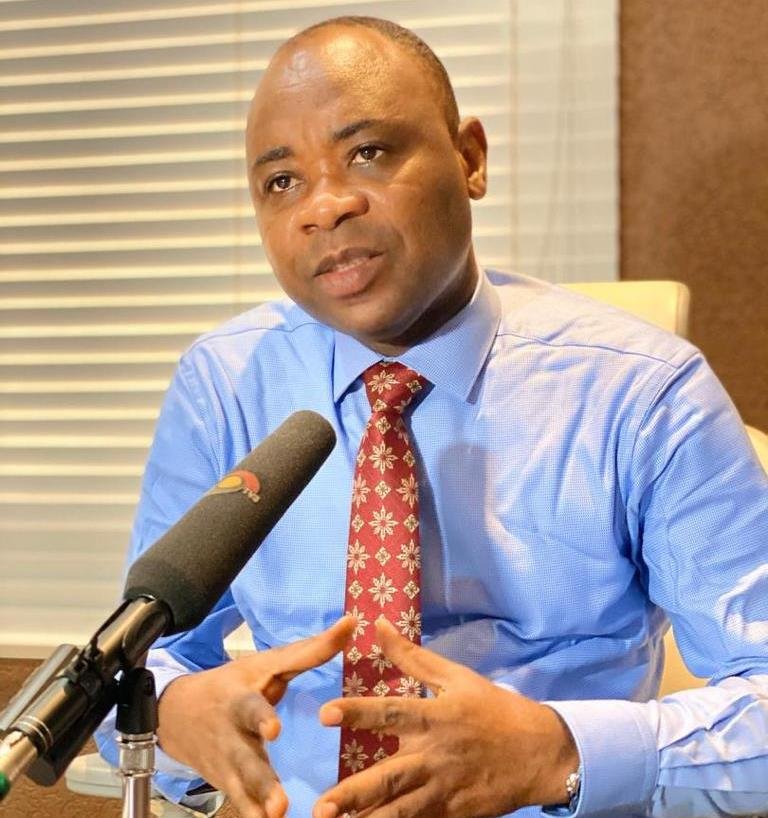
The Executive Director of Child Rights International, Bright Appiah, has described the handling of sexual misconduct cases in Ghanaian schools as a clear reflection of systemic failures to protect children and uphold their rights, dignity and privacy.
Speaking to Starr News on the suspension and subsequent interdiction of the Headmaster of Obuasi Senior High Technical School, Zakaria Abdulai, over allegations of sexual misconduct involving female students, Appiah said the situation exposes the inability of existing systems to safeguard learners.
“Our school system is not giving children the kind of protection that we need to give them. And it is also a reflection on how, when matters of this nature come, how the system itself addresses it. So clearly, it’s a situation where systems are not working to protect children or to give them aid in terms of how we would also respect our rights and dignity and privacy. So, basically, it’s just a reflection of whatever it is that is happening, is just a reflection of our inability to protect our children in schools,” he said.
Appiah noted that historically, such cases have often been handled through interdiction or, more commonly, transfers of the accused teachers. This pattern, he argued, has created a public perception that serious punitive measures are unlikely.
“It is not at all, and historically, if you look at how we’ve handled issues of that nature, it gives people the sense that the way is either the teacher being interdicted or transferred from the school. Especially, in most cases, they do the transfer instead of even the interdiction.
“So, people have psyche their minds to that kind of environment and they feel like the way that can happen in that situation is what historically has been done. So, people are not used to a situation where punitive measures will be administered for people to come to that reasonable conclusion,” he added.
He called on the Ghana Education Service (GES) to introduce stronger security and protective measures to curb rising cases of sexual misconduct in schools.
Appiah stressed that GES alone cannot determine criminal liability in such matters and must involve appropriate statutory institutions.
“We have to involve a lot of institutions to be able to give validity to anything that we want to do, so that when we appear before the court, we know that there are statutory institutions that are also giving effect to the issues that we want to submit.
“So, where they feel that they cannot handle it, I think that is not even within the purview of Ghana Education Service to say that somebody have committed sexual affairs, is involved in sexual misconduct, therefore, the person must be interdicted. I don’t even think that they even have the right to do so. If somebody has sexual activity with a child, the manner that the person is supposed not to, then the matter must be referred to the appropriate institutions to deal with it,” he stated.
The comments follow the Education Minister Haruna Iddrisu’s directive for the immediate suspension of Mr Abdulai pending investigations.
The GES has since interdicted the headmaster, directing him to hand over management of the school to the Ashanti Regional Director of Education and cooperate with ongoing probes.
A complaint has also been lodged with the police, and the Criminal Investigations Department (CID) has been requested to investigate.
The alleged incidents are reported to have sparked student unrest, leading to the destruction of school property and the temporary closure of the institution.
Source: Starrfm.com.gh