Introduction
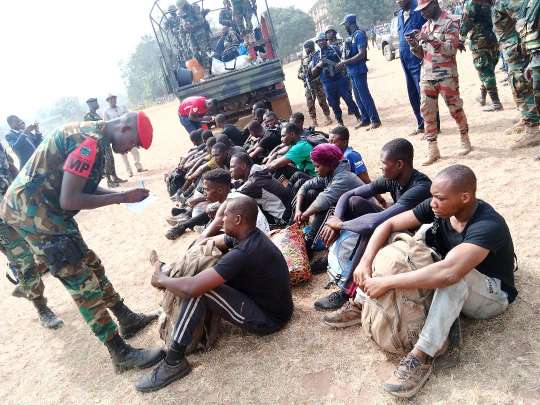
The news of the invasion and arrest of some 21 recruits of the Western Togoland ‘secessionists’ group by a joint team of the Military, Bureau of National Investigations (BNI) and Criminal Investigations Department of the Ghana Police Service must come as a bother to us all.
In this write-up, I will attempt to trace how similar groups in some of our neighbouring countries within the West Africa sub-region have grown and metamorphosed into the blood-sucking beasts now commonly referred to as terrorist groups or violent extremist organizations (VEOs). In order to achieve this, the piece will highlight some of the major drivers of violent extremism in West Africa, and under which will be a further focus on a few of the recruitment tactics used by some of the notable Violent Extremist Organizations such as Al Qaeda in the Islamic Maghreb (AQIM) in Mali, Boko Haram in North Eastern Nigeria, and the Islamic State in Iraq and Syria (ISIS). It will delve in further detail, the rule of law drivers of violent extremism, though there are also the economic, social and ideological drivers. It will finally segue into how potentially we have a similar case on our hands here in Ghana with the identification, invasion and arrests of the Western Togoland Militants.
West Africa is host to a dynamic and complex array of violent extremist (VE) activity that overlays with ongoing conflict zones and fragile states. The combination of ongoing conflicts and instability leaves people in these countries at risk of living under the control not of states, but of non-state armed groups such as violent extremist organizations (VEOs), and violent conflict risks spilling over into other countries. Failure to uproot VEOs and bring about an enduring peace in the region threatens further destabilization as VEOs continue to evolve and spread. This is ever the case in West Africa where VEOs emerge, split, evolve, and move to new locations. Local dynamics also shift as environmental changes affect traditional livelihoods, government responses to VEOs create new tensions with local communities, and experience with conflict tears at social fabrics. Together, these dynamics change the drivers of VE over time. In other words, we should anticipate that what drives VE today will not be what drives VE in the future.
Drivers of Violent Extremism in West Africa
Much of the literature on violent extremism does not provide a conclusive or complete picture of the drivers of VE in West Africa, however, a review of the few identified several important findings:
•Individuals and communities are subject to numerous drivers—political, economic, religious, and social—that interact with one another to influence whether West Africans join or support VEOs;
•Human rights abuses and government repression emerged consistently as main drivers of VE across West Africa;
•Political, economic, or social marginalization or exclusion were also prominent as drivers across West Africa; and
•Finally, how these drivers manifest differs across the region.
Some Recruitment Tactics Used by VEOs (pull factor)
The mere existence of many VEOs operating throughout West Africa presents an important pull factor for VE at regional and national levels. Because there are multiple groups operating throughout West Africa, individuals and communities are often more aware of the opportunities to join a VEO and of the incentives provided by different armed groups.
Moreover, with significant recruitment occurring throughout West Africa, there are relatively few barriers for joining a VEO in comparison to countries where VEOs are not located and so an individual would have to travel abroad to join a group.
VEOs in West Africa tend to either be home-grown (e.g., Boko Haram before it spread throughout the Lake Chad Basin) or imported through a sustained and lengthy process to embed with local communities (e.g., Al Qaeda in the Islamic Maghreb (AQIM) in Mali). In both cases, “jihadist violence often intertwines with local intercommunal tensions related to competition over natural resources and trafficking.”
However, the way groups rely on and interact with local populations reflect some basic differences between the groups. Al Qaeda tends to co-opt local issues in order to gather buy-in that helps sustain its organization over time.
Although in the Middle East, the Islamic State in Iraq and Syria (ISIS) creates local governance and coerces local populations – often viciously – into sharing its hard-lined world view, ISIS-West Africa (ISIS-WA – which emerged after a split with Boko Haram in 2016) has tried to mend relations with local populations by adopting less predatory and violent means of engaging with local communities. In contrast, Boko Haram (now Jama’atu Ahlis Sunna Lidda’awati wal-Jihad (JAS)) acts a bit more like ISIS in the Middle East by sustaining frequent attacks on local populations, including other Muslims, who do not tow the line.
At the same time, Boko Haram offers sanctuary and social services (including food) to people living inside its territory, which has incentivized some locals in Nigeria to join Boko Haram – because they see joining Boko Haram as a better alternative to being abused by the Nigerian state – despite Boko Haram’s brutal tactics.
Rule of Law Drivers
Rule of law is used here to describe a number of factors pertaining to state weaknesses that can drive people to join VEOs in West Africa. Such factors include respect for human rights; strong judicial institutions; fair and effective criminal justice systems; the social contract; and combating corruption. Absence or breakdown in these rule of law factors are frequent drivers of VE in West Africa.
States in West Africa who have active VEOs inside their borders tend to respond to these groups with their entire security force structure (police, military and BNI), often in conjunction with foreign military assistance. This military response is a necessary intervention in such conflict zones because security is a prerequisite for other kinds of Countering Violent Extremism efforts. However, to date, the problem with the way these security force interventions have gone in the region is that they are often just as predatory on and deadly toward the local communities as the VEOs.
Government provision of public services – such as access to education, healthcare, infrastructure, and security – is generally poor in West Africa, especially in peripheral regions. This is not due to lack of demand from the citizenry: The 2016 round of the Afrobarometer, sampling from 36 countries across Africa, asked people to cite the three most important problems that their governments should address. The leading responses were unemployment (38%), healthcare (32%), education (24%), and infrastructure (22%). When the demand for these services goes unmet by the government, it often further erodes the social contract and state legitimacy, which can cause citizens to go looking elsewhere for these services; this includes looking to VEOs. It is important to note here that Government’s inability to provide public services, coupled with corruption as drivers of VE that poses the greatest threat for Ghana.
Corruption is a cross-national VE driver in West Africa that multiplies the negative impact of other drivers. This is because corruption is not a failure of government, but a “functioning system in which ruling networks use selected levers of power to capture specific revenue streams.” Even in consolidating African democracies such as Ghana, corruption threatens to reverse and dismantle gains made in strengthening the state and is an ever-present threat to stability.
Perhaps most egregiously, corruption can incentivize politicians to turn counter-terrorism interventions into personal cash cows, as some recent analysis suggests is happening in Nigeria. So pernicious is corruption to stabilization and governance efforts that Simplice and Kodila-Tedika argue that “among the governance tools, corruption-control is the most important for the battle against the scourges of crime (and conflicts).”
Corruption has severe implications for security. For example, it may motivate decisions to perpetuate violent conflict, if elites see conflict as a means for profiteering and wealth transfer. Or, corrupt officials may allow VEOs to operate freely – for a fee. Corruption can also create room for vigilante justice and encourage informal militias to carry out “street justice,” which can have knock-on effects of sparking cycles of revenge killings and inter-ethnic conflicts which serve to ignite intra-communal conflicts, which themselves become drivers of VE. Failure to provide public services is also exacerbated by state corruption.
Now, is it surprising that many of the 21 recruits of the Western Togoland ‘Secessionist’ militants apprehended yesterday at their training camp around Dzordze put up a defence that they were under the impression that they were being recruited into the regular armed forces and other security agencies of Ghana?
One might find this defence as absurd and unacceptable on the face value, but wait a minute; before you rubbish their claims, is it not highly possible that they were indeed telling the truth? And that they were merely victims of fraud? Granted that even their recruiters were indeed members of the militant wing of the Western Togoland Secessionist Movement, how were these unsuspecting victims of this fraud to know that they were possibly signing off their freedom to a militia group?
Has it not been the case that for over the past three or so years now recruitment into the security services have sometimes been shrouded in secrecy? If indeed this is anything to go by, then one could conclude that exercises, such as recruitment into the Armed Forces, the Police Service, the Ghana Immigration Service, Prisons and Fire Services, and of course the Customs Excise and Preventive Service (CEPS) division of the Ghana Revenue Authority all of which used to publicly advertise their recruitment in the various print media have all of a sudden gone secret or resorted to ‘under cover recruitments’. This only allows those with political connections and in most cases those who can bribe their way through, if even they are fortunate enough to hear of such an exercise, to go through.
And while those in authority are secretly considering their party foot soldiers for consideration for placement in the security services and selling the remaining slots to those who can afford, they should also remember that the “bad guys” are likewise adopting the same mechanisms and strategies to recruit unsuspecting youth into violent extremist organizations such as Boko Haram, Al Qaeda in the Islamic Maghreb (AQIM), the Islamic State in Iraq and Syria (ISIS) and now the Militia Wing of the Western Togoland ‘Secessionist’ Movement. This must be a concern to all of us.
Source: Andrew M. Nantogmah
Development Communications Professional and Conflict Peace and Security Researcher