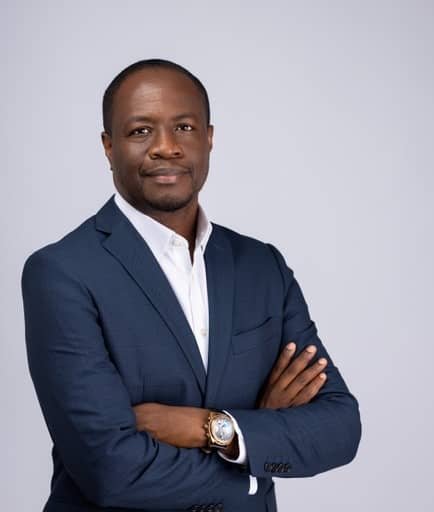
A leading member of the largest opposition New Patriotic Party (NPP), Fiifi Boafo, has raised a series of tough questions about the Mahama-led government’s decision to reject Goldfield Ghana’s lease renewal bid of its Damang Mines.
According to him, this has broader implications for the mining sector and the local community.
In a reflective piece on social media, Mr. Boafo questioned the Minerals Commission’s transparency and the long-term viability of the state taking over such a significant mining operation.
“There are several questions on my mind as I sit quietly here in Tarkwa contemplating on the life of the mine and its impact on the 1,520 workers, service providers and our dear community,” he stated.
He demanded clarity on the rationale behind the decision to deny Goldfields a renewal of its mining lease.
“What led to the decision to deny Goldfields’ renewal application? The Minerals Commission promised to conduct a forensic audit before deciding on the renewal application. Why did they decide against this, and what happened to the directive from the sector minister for an audit?”
Mr. Boafo also took issue with the conduct of the Commission’s leadership, raising questions about accountability.
“Why did the Minerals Commission boss deny knowledge of the application? What happened after Goldfields provided Mr. Ayisi, the Commission’s boss, with evidence of their request for renewal?”
He also touched on rumours that Goldfields’ Tarkwa Mine could face a similar outcome when its lease expires in 2027.
“How true is the rumour that the Tarkwa Mine of Goldfields will suffer the same fate just as the Damang Mine when their lease expires in 2027?” he queried.
He also pointed to the possibility of Goldfields seeking international arbitration after being denied the lease, asking, “If Goldfields pushes for arbitration after Friday, what could be the likely consequence of the action?”
Mr. Boafo highlighted concerns about operational continuity. He revealed that the new operator is expected to inherit stockpiles estimated at 3.5 million tons—sufficient for about nine months of operations.
“What will happen to the mine after that period?” he asked. “Will there be a final feasibility study conducted to evaluate the continuation of operations in the Main Damang pit?”
Touching on speculation about a Ghanaian firm taking over the mine, he questioned the company’s capacity to operate the site effectively.
“Does such a company possess the necessary capital and technology to operate the mine after nine months? Will they be permitted to partner a foreign company?” he quizzed.
Mr. Boafo also questioned how long the Minerals Commission intends to manage the mine before handing it over to a private operator.
“How long is this interim operation expected to last, and what will be the process for selecting the company to take over?”
His concerns extended to the government’s ability to sustainably manage such operations.
“Does the government have the capacity, track record to successfully manage a state-owned mining company in the long term?”
Ultimately, Mr. Boafo called for a broader national conversation about the benefits of the decision, posing the most critical question:
“Is this arrangement beneficial to Ghanaians, the mining industry, employees of the mine, chiefs, and the people of the catchment area of the mine?”
Source: Ghana/StarrFM 103.5FM/Tutuwaa Danso