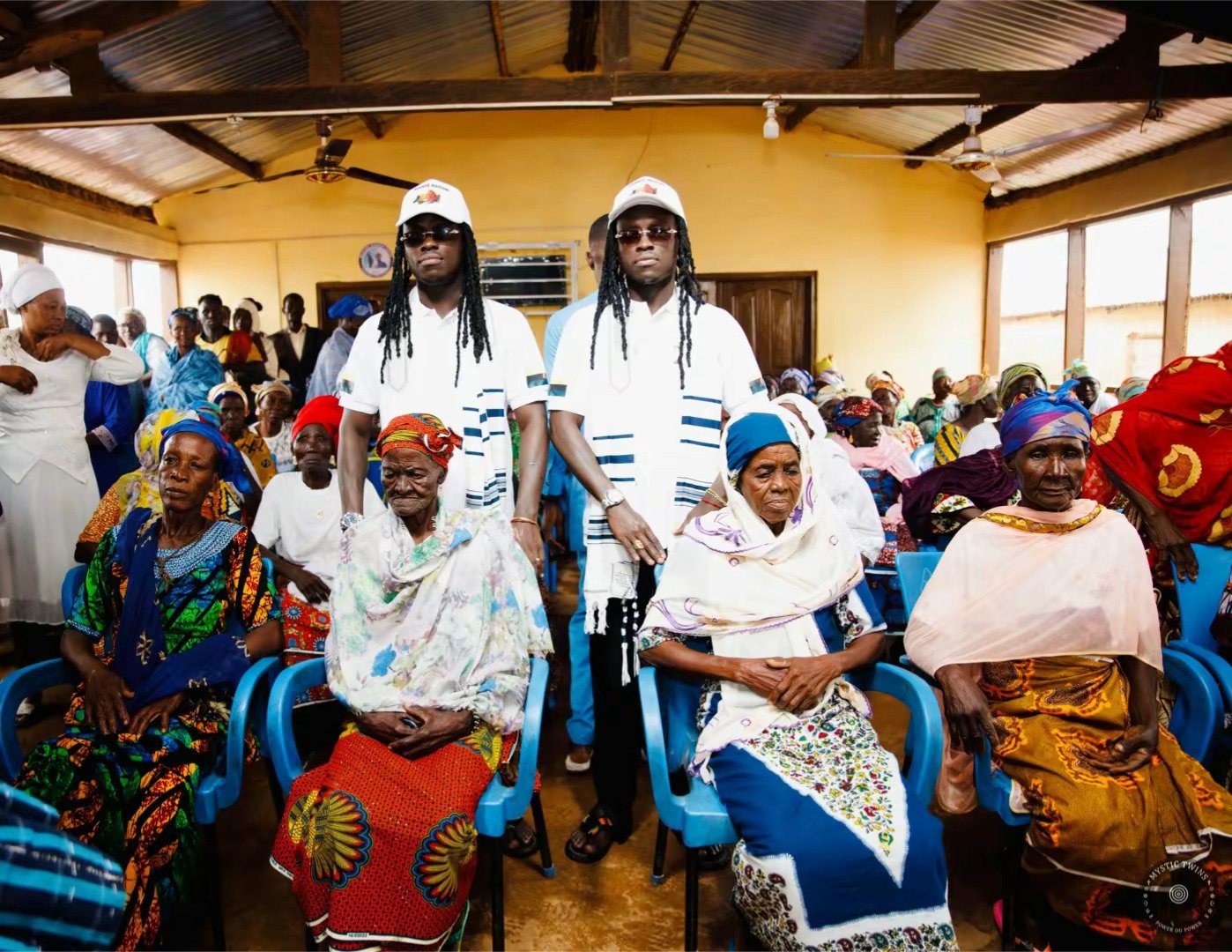
As part of reconciling the past with the present, the foundation made donations to the women of the long-standing settlement, shining light on more than two centuries of social stigma and injustice.
The Mystic Twins Foundation continues its outreach across Ghana, strengthening its support for vulnerable groups and marginalized communities mainly through donations. This time, the foundation turned its attention to the northern part of the country, visiting a historic settlement that used to be home to women accused of witchcraft and forced to live in exile from their families and communities.
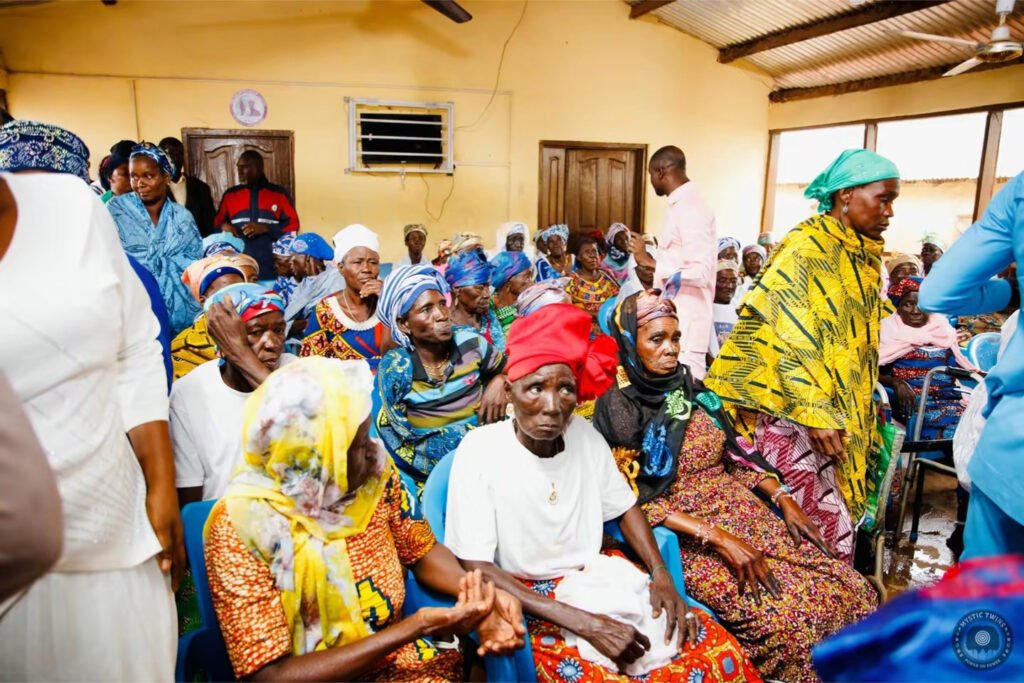
Once a symbol of exclusion, the site has evolved significantly following decades of public advocacy and support. Although the government has yet to formally end its practices, the settlement is now supported by local authorities and humanitarian organizations, working together to provide shelter, counseling, and a community for women who would otherwise face persecution.
The foundation’s visit offered not only material support but something far more profound. It stood as a continuation of its broader mission to uplift and restore dignity across Ghana. Through the outreach, the foundation sought to instill a sense of belonging and renewed purpose in women who have long been denied both. The camp’s overseers expressed appreciation to the foundation for its efforts to help restore the hope of it’s over a hundred residents.
Speaking about the outreach, Nana Akwasi Agyemang Panyin (McMaine) and Nana Akwasi Agyemang Kakra (McKenzie) he names behind the eponymous Mystic Twins Foundation shared: “Historically, the Gambaga Witch Camp has been a place marked by centuries of stigma and pain. Women who found themselves there were forced to live out the rest of their days in isolation, not because of wrongdoing, but due to fear and cultural misconceptions. Today, it stands as a refuge, a space for healing and acceptance – and we felt compelled to be part of that transformation.”
They added, “While immense progress has been made, we find it disheartening that our society still continues to turn its back on the misunderstood. Our visit was meant to be a quiet gesture of solidarity. The goal was to approach this community without judgment, because that is all they have ever known. We brought gifts, love, and above all, a reminder that these women, survivors, mothers, even grandmothers, are seen. You are not forgotten.”
At a time when charity has become a social media numbers game driven by online engagement, the Mystic Twins reject this approach, not just in words, but through action. As spiritual heads, they are keen to redefine the true meaning behind this age-old virtue: an act rooted in values that uphold human dignity. Their work under the foundation stands to reflect a deeper truth: charity is not about playing savior, but about building solidarity.
In light of this, the foundation’s efforts, despite being modest by design, continue to make an impact that far outweighs their scale. One such outreach, which drew minimal attention, was its visit to the Korle-Bu Teaching Hospital, where around thirty new mothers had their medical expenses covered. The gesture highlighted another vital truth about giving: that its highest purpose is to restore peace of mind.
Widely recognized for their spiritual work and private counsel to prominent individuals, the Mystic Twins continue to build a reputation that reaches beyond Ghana’s borders. Their recent appearance at the Ga Mantse’s palace echoed the growing mutual respect between old traditional leadership and new age figures like themselves. It comes at a time when many young Africans are reclaiming their cultural identity, serving as a reminder that spirituality and tradition still hold an important place in national conversation and in our daily lives.
As Ghana, and the world at large, continues to grapple with economic challenges and complex social issues, organizations like the Mystic Twins Foundation seek to offer relief. They remain committed to driving societal change, one led by compassion, purpose, and service that does not seek applause or reward. “At the end of the day, true transformation doesn’t announce itself loudly; it is felt in the lives it quietly changes,” they said.