Ever since the banking crisis of 2018, entrepreneurs in the Ghanaian banking and fund management space have been under attack. Shareholders and directors have been called thieves. The masses have been ill-advised that they are guilty of failing to perform due diligence. They have also been told that they were taking on too much risk, even though the act of entrepreneurship in a frontier market is and has always been a very risky venture. Now there are threats to criminalise the very entrepreneurs who have supported Ghana’s economy for years! Incredibly, commentators true to our culture of pulling people down, are celebrating these charges when they are nothing more than economic fratricide. Ghanaians have been attacking their fellow Ghanaians who took risks to create jobs for the citizenry when they should be supporting each other to get a leg up in the global economic world.
The actions of our leaders have thrown Ghana into an inflationary recession. Inflationary recessions happen in countries that are reliant on foreign capital flows (we need $USD debt like Eurobonds, foreign direct investment and proceeds from exports to keep our import led economy moving) build huge debts denominated in foreign currency. When foreign capital flows slow, as they have in Ghana, because foreign investors have refused to roll over their investments in local debt and companies, credit creation (extension of loans) becomes credit contraction (loans to local companies have dropped in $USD terms and the share of banks investment in treasury bills has risen because they are refusing to lend to local companies and the banks that used to lend to local companies have been collapsed).
A typically sensible response to an inflationary recession is to provide liquidity to help save the system. Take this quote from Ray Dalio, one of the largest fund managers in the United States, about what to do when there is a debt crisis:
“There’s an understandable tendency when a crisis hits to make sure that the people who caused the problems aren’t inadvertently rewarded. But, Dalio writes in the book, that can be a mistake. “At such times, above all else, the most important thing is to provide lifeblood (i.e., stimulants) to keep the systemically important parts of the system alive. It is dangerous to try to be overly precise in getting the right balance between a) letting those who borrowed and lent badly experience the consequences of their actions and b) providing judicious amounts of liquidity/lending to help rectify the severity of the contraction.”
In Ghana, instead of providing stimulus and liquidity, the government has starved the sector of liquidity by refusing to honour legal obligations under contracts extended before they arrived in power. They poured petrol on the fire. Once contractors stopped being paid, local banks and local fund managers were starved of liquidity. Then to add insult to injury, the Ghana government did not just work to “make sure that the people who caused the problems aren’t inadvertently rewarded.” They went to the extreme, because Ghanaians have a clinical disdain for our fellow countrymen in business. They yelled that Ghana has too many banks. Washington DC has 29 banks with a population of under 800,000. Ghana’s economic team, led by Mr. Ken Ofori-Atta acting as the white clad grim reaper of the financial services industry, decided to punish entrepreneurs three times: 1. Shame them in the press, call them thieves; 2. Take away their businesses and licenses so all the cash, equity, sweat equity, job creation they provided are forever destroyed and 3. threaten to put them in jail and press criminal charges against them. If one looks at the textbook response to a debt crisis, instead of following the standard response, Mr Ken Ofori – Atta rather decided to use the book to light fires at local banks and encourage customers to run for their money before it was all burnt.
This has been one of the costliest economic mistakes in Ghana’s history. The banking sector has shrunk in real terms. The stock market had its worst performance in years in 2019, destroying the value of mutual fund investors and depriving the economy of the “wealth effect.” When people see the prices of their stocks and bonds going up, they feel confident and spend, keeping the economy moving. When they drop, it has the opposite effect. And above all, the real economy, the one felt by local individuals and local companies, has been plunged into an inflationary recession. People have less money in their pockets because the cedi keeps depreciating, in large part because foreign investors have lost confidence in the economy and are refusing to buy shares in local companies and have stopped rolling over their investments in local securities. They are rather opting to exchange them for dollars in search of greener pastures abroad – where the local politicians don’t look for entrepreneurs to hang when the country goes through a debt crisis.
Billions of cedis have been stolen from the Ghanaian people due to the fear and greed of some members of the ruling party. They are afraid of entrepreneurs who don’t lick their boots. And they appear to feel they are entitled to everything good in Ghana, that they are the ordained rulers of Ghana. Through the backs of people who voted them to power, now they are the rightful lords of the fiefdom. And now they are looking to destroy competition and create opportunities for friends and family amidst the chaos. Instead of simply working for all Ghanaians and letting the contract payments flow to calm the markets and work through the crisis without handing the financial services sector over to foreign owned companies.
Let’s face it, did the collapse of these institutions really help anyone? Do we see foreign investors rushing into the Ghanaian bank sector? Knowing that all those who bought Cedis at GHS4.75 to $1 to recapitalize banks have already lost 20% of their investment because the Cedi has run to GHS5.6 to $1? Who wants to invest in a banking sector when they are aware that they would lose money automatically to depreciation and when they take on more risks to cover the loss, they are branded as thieves? These are facts. Anyone who used dollars to buy shares in a bank in Ghana as mandated by Mr Ken Ofori-Atta’s ridiculous GHS400 Million capital requirement policy, has suffered a terrible loss due to depreciation of the cedi. Of course, none of them will speak up about it in public for fear of retaliation.
The problems in the broader financial services sector were entirely preventable. Instead of arbitrarily raising capital limits in the banking sector, withholding liquidity by not paying contracts and stoking fear amongst the public to prompt a run on local institutions, all that our leaders needed to do was implement new laws that focus on speeding up debt collection and the resolution of insolvent companies and simply pay the debt they owe or engage in reasonably good faith negotiation for discounts to keep the liquidity flowing. Instead, some contractors and fund managers were selectively identified to receive discounted payments from Fidelity Bank. We would not have even had to print money as Mr Kwame Pianim recently suggested, to solve the problem. All the Ministry of Finance and other state agencies needed to do was negotiate a reasonable 10% or 15% discount on interest owed to all banks and fund managers, not just a select few, and there would have been enough liquidity in 2018 to stop the crisis from accelerating.
So unlike foreign debt crises that were caused by private sector asset bubbles, people borrowing too much to pay for homes or stocks that were overvalued, this one was caused by the government refusing to pay “legacy” liabilities, particularly in the case of fund managers. And instead of focusing on the people who caused the problem (government) the government is punishing the entrepreneurs who have lost all the capital they put at risk and more. If the government helped the companies by paying the debts owed to them and helping them collect from private businesses that owe them, we would stop the ballooning of bad debts, customers would get payments and calm would prevail. The banking clean-up could have been done without destroying billions of cedis in value and creating a nasty web of lawsuits that will take 5 years to resolve at a minimum.
The relentless attacks on Ghanaian investors must stop. Even for those that erred, they created jobs and took risks for the benefit of us all. Before 2017, Ghanaian entrepreneurs were heralded all over the world. Now they are looked upon with fear and suspicion, especially if they are in banking or finance sector. They have been deprived of the companies they poured their lives into. The focus now should be on fixing the problems, instead of telling lies for political reasons and dragging hard working men and women to court on criminal charges in place of working with them to recover the money needed to pay out customers of the collapsed institutions as was done in the US in 2008.
All Ghanaian citizens should call on government and all state-owned entities to pay the full amount of the debts owed to local companies, so at the very least they can settle some portion of funds owed to customers. Government must fast track new legislation that provides a clear, quick and fair method of resolving insolvent companies, complete with the technical capacity for courts to understand these issues without relying on private receivers and accounting firms, because their fees are a drain on national purse. This will take time, but if payments on government debts are made quickly, the customers of local institutions who are suffering will get some short-term relief. And we can take a small step to end the endless cycle of attacking our own indigenous Ghanaian businesses when things go wrong – instead of holding arms and taking the fight to the global competitive marketplace, so we can all move forward as one nation.
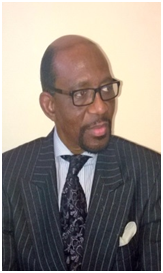
By: Kit Yawson, UK.