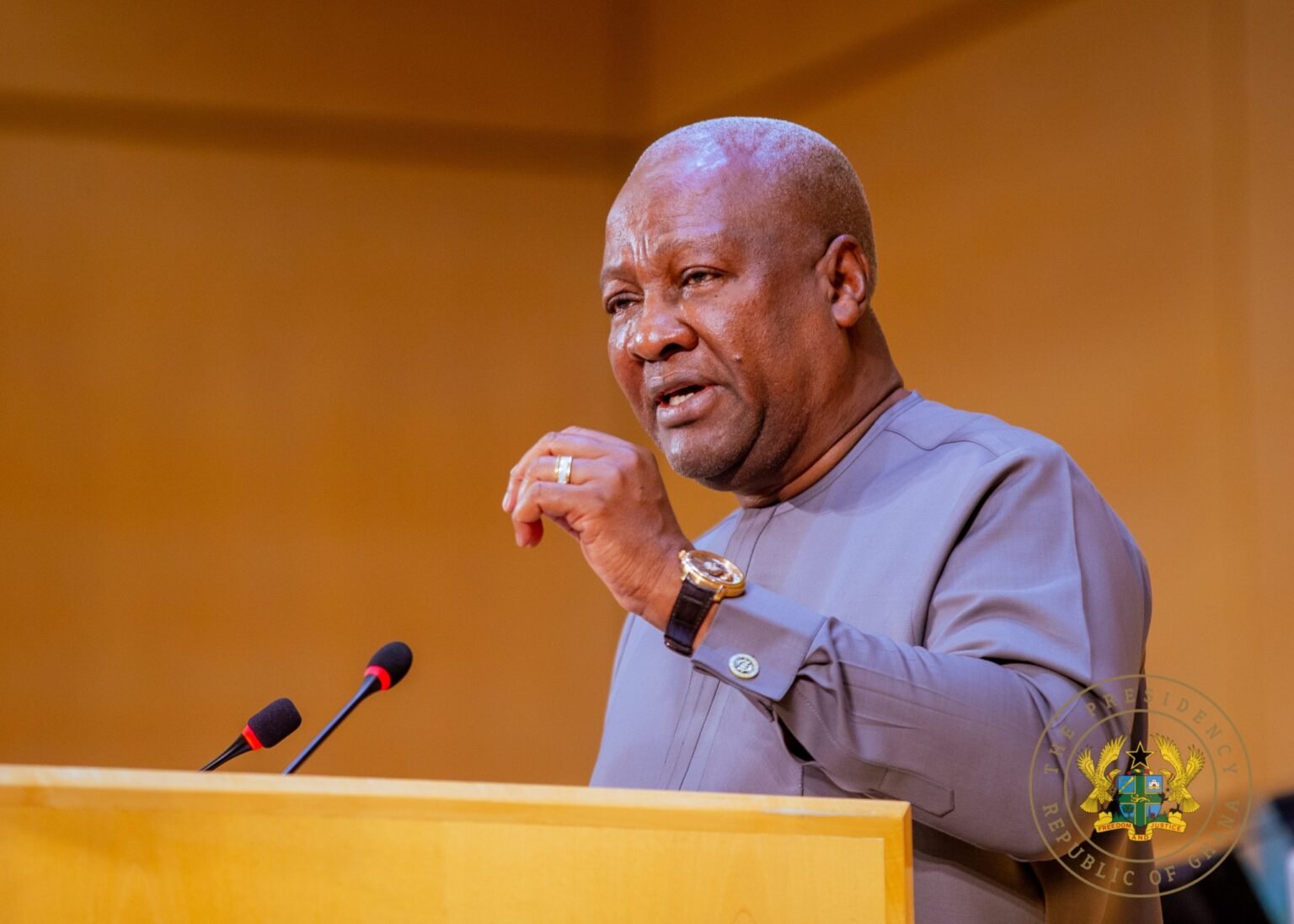
President John Dramani Mahama has declared that Ghana has moved beyond rhetoric to implement practical, citizen-centred healthcare reforms, as he outlined the country’s health transformation agenda at the 79th World Health Assembly (WHA) in Geneva.
Delivering a keynote address at the World Health Organisation’s highest decision-making forum, President Mahama said Ghana’s recent policy direction demonstrates a shift from policy debate to implementation focused on access, equity, and sustainability in healthcare delivery.
“In Ghana, we have moved beyond rhetoric to implement calculated, aggressive policies that place the citizen at the centre of the clinical encounter,” he said.
The President noted that global health systems are facing significant disruption, including sharp reductions in humanitarian assistance and development funding, warning that such trends threaten decades of progress in health outcomes, particularly across the Global South.
He cited a reported 40 percent decline in humanitarian assistance and reductions in overseas development aid from major economies, adding that these shifts have already affected health financing in Ghana and other African countries.
According to him, Ghana lost about US$78 million following the closure of USAID-supported programmes, which previously funded malaria control, maternal and child health, nutrition, and HIV/AIDS interventions.
Despite these challenges, President Mahama said Ghana is strengthening domestic systems through what he described as a health sovereignty agenda anchored in the Accra Reset Initiative.
He highlighted the expansion of the National Health Insurance Scheme (NHIS), which he said now covers about 66 percent of the population as of the end of 2025, leaving 34 percent still uncovered. He added that reforms are underway to improve efficiency, expand coverage, and strengthen preventive healthcare.
He further announced the introduction of a Free Primary Health Care programme aimed at removing financial barriers to basic healthcare services, particularly in rural and underserved communities.
“This ensures that citizens in the most remote parts of our country also enjoy access to quality healthcare on par with those in urban centres,” he said, adding that the World Health Organisation had congratulated Ghana on the milestone.
President Mahama also disclosed that government had removed the cap on the National Health Insurance Fund, freeing up an additional GHS 3 billion (approximately US$300 million) for health sector investment.
He said digital reforms, including the use of artificial intelligence, are being deployed to improve claims processing, reduce fraud, and ensure timely payments to healthcare providers.
“By ensuring providers are paid on time, we ensure our citizens are treated with dignity,” he said.
On non-communicable diseases, the President pointed to the Ghana Medical Trust Fund, also known as MahamaCares, which he said is supporting patients with conditions such as cancer, cardiovascular diseases, liver disease, and kidney failure.
He also noted Ghana’s progress toward transitioning away from donor dependence for vaccines by 2030, with the goal of becoming a donor country in the future.
President Mahama used the platform to advocate for reforms in global health governance, arguing that developing countries must not remain dependent on external systems that are increasingly under strain.
He warned against reform processes that protect existing institutional structures at the expense of effectiveness, stressing that global health systems must prioritise impact over institutional comfort.
“We cannot prioritise institutional comfort over human survival,” he said.
He outlined Ghana’s contribution to the Accra Reset Initiative, including efforts to build a more coordinated global health architecture through mechanisms aimed at improving financing, policy alignment, and investment in local manufacturing.
President Mahama said Ghana is leading by example, committing GHS 34 billion to the health sector in its 2026 budget and expanding coverage to 20 million people.
He concluded by calling for global cooperation that prioritises real-world outcomes over declarations.
“The only metric that matters is whether a child in the Global South has a reasonable chance of survival as a child in the Global North,” he said.
Source: Starrfm.com.gh