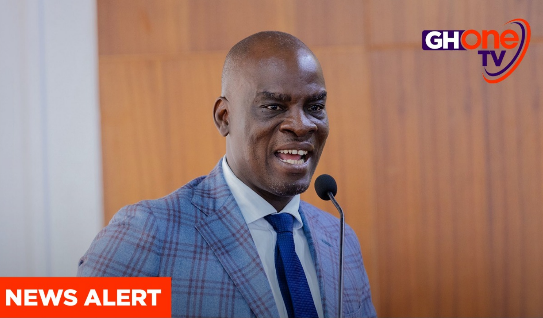
A legal position advanced years ago by the Minister for Education and former Minority Leader, Haruna Iddrisu, on the prosecutorial powers of the Office of the Special Prosecutor (OSP) has resurfaced following a recent High Court ruling in Accra.
The ruling, delivered by Justice John Eugene Nyante, held that the OSP does not have independent authority to prosecute criminal cases, directing that all such matters be handled by the Attorney-General.
The court decision has drawn attention to remarks made by Mr. Iddrisu on October 26, 2017, during parliamentary debates on the bill establishing the anti-corruption body. At the time, he warned that the proposed law carried constitutional risks.
He argued that the bill was “pregnant with constitutional flaws” and cautioned it could create what he described as “an illegal child called a Special Prosecutor.”
Citing the 1992 Constitution, he maintained that prosecutorial powers rest solely with the Attorney-General, who is mandated to initiate and manage criminal prosecutions on behalf of the state.
He further questioned the concept of an independent Special Prosecutor, noting that both the Attorney-General and the proposed office would be appointed by the same President, raising concerns about true autonomy.
Mr. Iddrisu also warned of possible institutional overlap, arguing that assigning both investigative and prosecutorial functions to the OSP could blur responsibilities among agencies such as the Ghana Police Service and the Economic and Organised Crime Office (EOCO).
He proposed a clearer separation of roles, suggesting that investigative bodies should focus on fact-finding while prosecution remains within the Attorney-General’s domain.
Years later, the High Court ruling has echoed those concerns, effectively affirming that the OSP lacks independent prosecutorial authority.
In an article signed by Hashmin Mohammed, Press Secretary to the Education Minister, he noted that the ruling reflects the long-standing concerns raised during the passage of the OSP law.
The judgment followed a legal challenge filed by Peter Archibold Hyde, who questioned the constitutional basis of the OSP’s prosecutorial powers. The court subsequently ordered that all OSP cases be referred to the Attorney-General for prosecution.
The development has been described by observers as a significant moment in Ghana’s legal and governance discourse, reinforcing the importance of constitutional interpretation and institutional checks.
As debate continues over anti-corruption structures and mandates, the ruling has revived earlier arguments made in Parliament, with some viewing it as vindication of concerns raised during the legislative process.
Source: Starrfm.com.gh