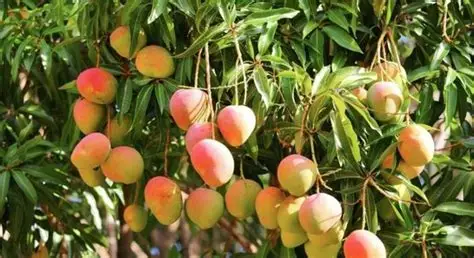
A new study has revealed that the misapplication of chemicals used by mango farmers to fight fruit flies and mealybugs may be slowly poisoning farmers, their families, and the very land they cultivate.
Dr. Kwaku Adu of the Department of Applied Economics at the University of Environment and Sustainable Development (UESD), Somanya, who led the research, uncovered startling evidence that “while pesticides safeguard mango yields, their misuse is leaving dangerous scars on health, food safety, and the environment.”
The findings were published in his recent paper, “Knowledge, attitudes, and practices of mango farmers on the harmful effects of pesticide use in Southeast Ghana” in Cogent Food and Agriculture.
“We spray because without it, we cannot harvest,” admitted one farmer. “But sometimes after spraying, I feel dizzy and cough for days.”
The study, which surveyed 112 mango farmers across Shai Osudoku, Yilo Krobo, Lower Manya Krobo, and Upper Manya Krobo, paints a worrying picture.
Less than 13% of farmers were aware of the environmental consequences of pesticide use, and just over 12% wore protective gloves during spraying.
More than 60% disposed of empty containers by burning them or dumping them on their farms, a practice that contaminates soil and water.
Health consequences are already visible: farmers reported headaches, skin rashes, coughing, pneumonia, asthma, and even deaths linked to pesticide exposure. Despite these risks, over 90% of farmers continue to rely heavily on pesticides—often without any protective equipment.
This unsafe dependence not only threatens rural communities but also risks damaging Ghana’s mango export industry.
International markets, particularly in Europe, enforce strict standards on pesticide residues. Continuation of these practices could trigger export restrictions and tarnish Ghana’s reputation abroad.
Dr. Adu stressed that the problem goes beyond ignorance, citing economic and structural barriers. Larger households struggle to afford protective gear, while weak regulation and limited training leave many farmers unaware of safer alternatives.
“This is not just about saving mangoes,” he cautioned. “It is about saving lives, protecting ecosystems, and securing Ghana’s agricultural future.”
The study urges urgent national action, recommending mandatory training before pesticide purchases, subsidized safety equipment, and community-based systems for safe disposal of containers.
It also calls for stronger enforcement to curb counterfeit chemicals and the promotion of integrated pest management and eco-certification schemes to encourage sustainable practices.
Mangoes remain one of Ghana’s most promising export crops. In 2024, the country earned US$75 million from mango exports, up from US$62.05 million in 2023.
The United Kingdom alone accounted for 21% of exports.
Protecting farmers’ health, the report emphasizes, is not only a moral obligation but also essential to sustainable agriculture, environmental protection, and ensuring food safety for consumers at home and abroad.
Source: Starrfm.com.gh