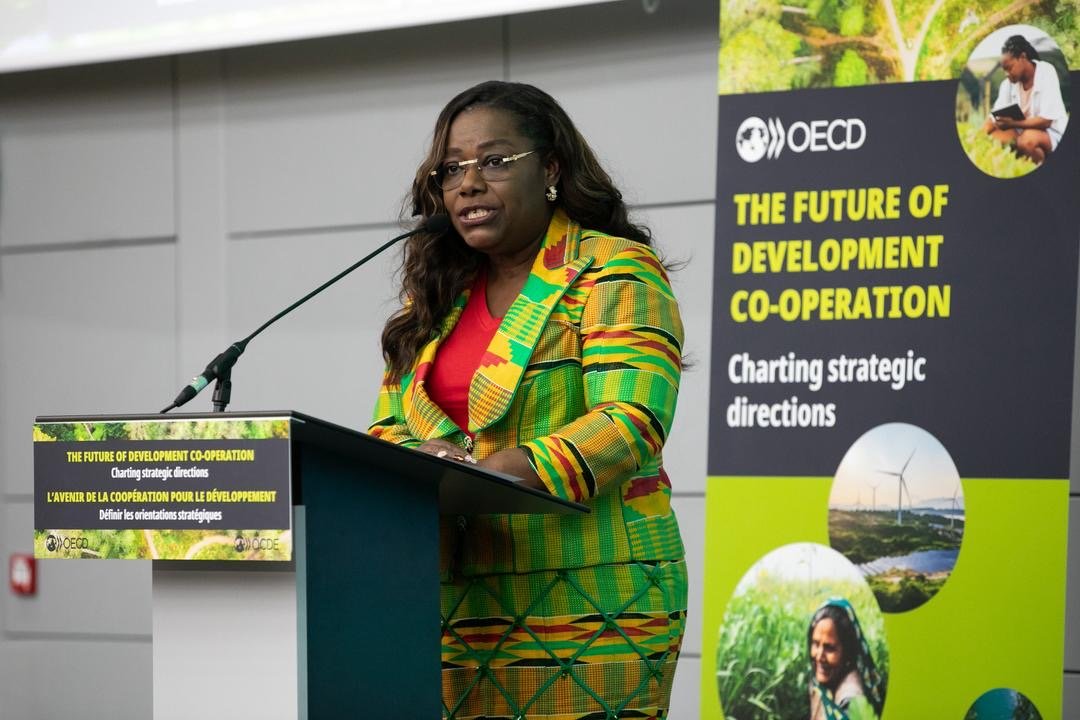
Ghana has used a high-level OECD conference in Paris to push for a major reset of global development cooperation, calling for a shift from dependency-driven aid systems to sovereign, execution-focused partnerships.
Delivering a keynote address on behalf of President John Dramani Mahama at the OECD Development Co-operation Directorate Conference, Deputy Chief of Staff (Administration), Nana Oye Bampoe Addo, said the current global development architecture is facing an “existential reckoning” amid steep declines in international aid flows.
Addressing delegates at the OECD Headquarters in Paris, she said Official Development Assistance (ODA) from Development Assistance Committee (DAC) countries declined by 23.1 per cent in real terms in 2025, amounting to about US$50 billion; the sharpest annual drop on record.
According to her, bilateral ODA to sub-Saharan Africa fell by more than 26 per cent, while humanitarian aid declined by nearly 36 per cent, with the OECD projecting further reductions in 2026.
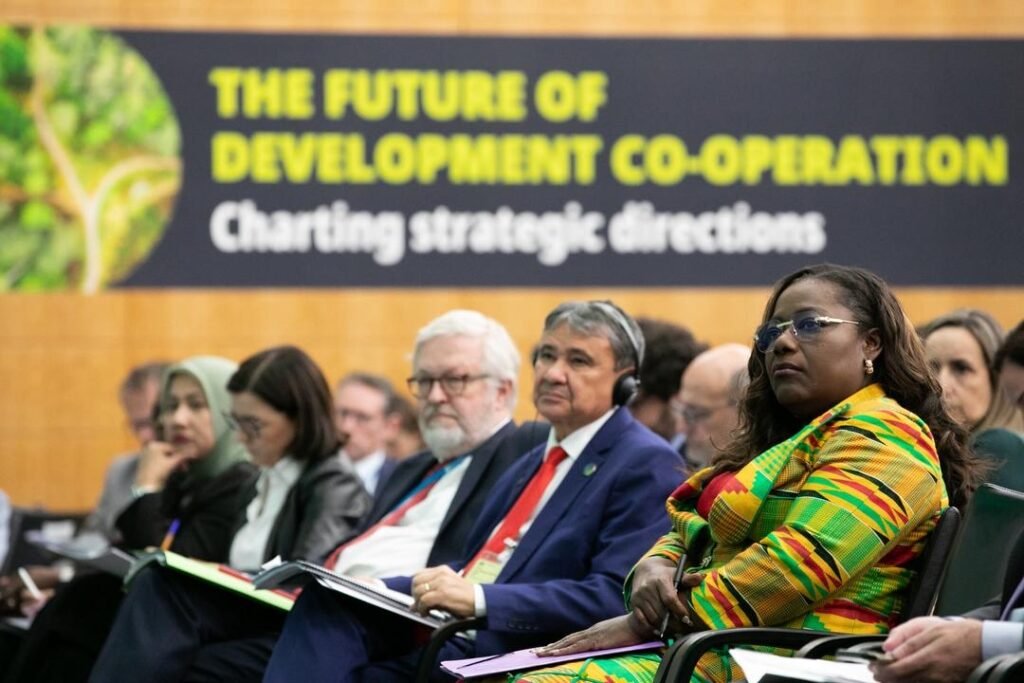
“These are the cold, grisly numbers staring us all in the face,” she said, warning that the global system was shrinking at a time when populations facing climate vulnerability and debt burdens are growing fastest.
Speaking on behalf of President Mahama, Nana Oye Bampoe Addo presented the Accra Reset as a practical response by the Global South to changing global realities.
She described the initiative as a Head-of-State-anchored platform designed to “retool how development cooperation functions in practice” by strengthening sovereign capacity and reducing dependency.
“The Global South faces a choice. We can continue to support the restoration of old models, or we can build the sovereign capacity to finance, deliver, negotiate and implement on our own terms,” she stated.
The Accra Reset’s Presidential Council includes sitting Heads of State from Africa, Latin America and the Caribbean, while its Guardians’ Circle is made up of former leaders including Olusegun Obasanjo, Ellen Johnson Sirleaf, Jakaya Kikwete, Ameenah Gurib-Fakim, Helen Clark and Gro Harlem Brundtland.
A major focus of the address was the reform of global health systems, which Nana Oye Bampoe Addo described as the “entry point” for the Accra Reset agenda.
She highlighted the launch of the High-Level Panel on Reform of the Global Health Architecture and Governance, announced in April 2026. The panel is co-chaired by Peter Piot, El Hadj As Sy, Nísia Trindade and Budi Gunadi Sadikin, with Michel Sidibé serving as Special Adviser.
According to her, the panel’s mandate is to design reform proposals from the perspective of Global South countries rather than from existing global institutions.
The panel is expected to focus on sustainable health financing, local manufacturing and innovation, and reforms to global health governance structures.
She also introduced HINGE, the Health Investment National Gateways Enabler, a sovereign delivery mechanism aimed at transforming existing commitments into “bankable and executable investments” within 24 months.
Beyond health, she said the Accra Reset is pursuing economic transformation through what it calls Sovereign Prosperity Spheres (SPS), geo-economic platforms intended to coordinate industrial growth and cross-border value chains among neighbouring countries.
Key sectors identified include agribusiness, textiles, agroforestry, transport infrastructure, social housing and industrialisation.
She further revealed plans for sovereign exchange instruments involving critical minerals, explaining that countries such as Ghana, Singapore and Mali could jointly issue gold-backed financial products, while the Democratic Republic of Congo and Zambia could collaborate around cobalt-backed instruments.
On institutional strengthening, Nana Oye Bampoe Addo highlighted the Sovereign Negotiators Network, also known as the Sankoree Institute of Global Negotiators, which is training national negotiators in sectors including health, mining, finance and digital infrastructure.
She also introduced the Global Skills Digital Passport, known as Masterkey, aimed at creating verified cross-border employment pathways under the African Continental Free Trade Area (AfCFTA).
The programme targets 150,000 job placements within five years, with 70 per cent expected to benefit women.
The Deputy Chief of Staff stressed that development cooperation must evolve beyond rhetoric and move toward implementation and shared accountability.
She called on the OECD to incorporate the perspectives of initiatives such as the Accra Reset into its flagship reports as “co-authored contributions” rather than consultation inputs.
She also urged the DAC Review process to engage more seriously with sovereign delivery systems and warned against “mutual benefit” arrangements that place disproportionate risk on weaker economies.
“Mutual benefit cannot mean that the stronger party gains most while the weaker party carries the risk,” she said.
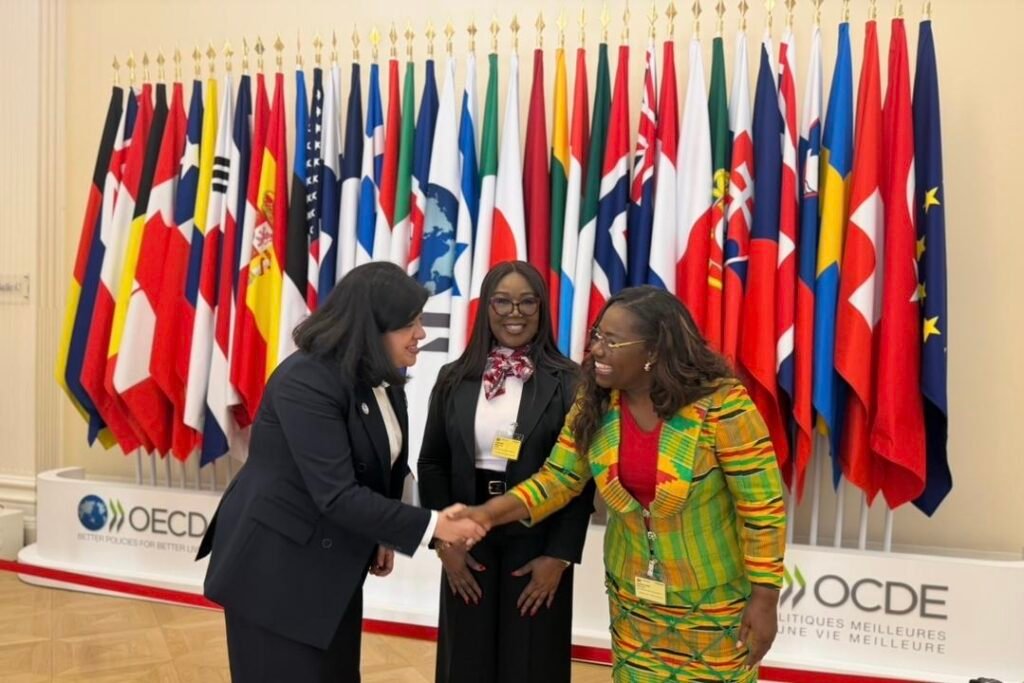
Nana Oye Bampoe Addo said Ghana, under President Mahama, remains committed to serving as a co-architect of a new global development framework.
She disclosed that the Accra Reset initiative will continue engaging at major global policy platforms this year, including the DAC Review, the G7 and G20 processes, the UN General Assembly, and the World Bank-IMF Annual Meetings.
“Ghana is here on behalf of the Accra Reset as a co-architect of a new moment in global development,” she said.
Source: Starrfm.com.gh