…Second-class citizens
In this highly globalised world, competition from foreigners within respective national economies are not only inevitable, but they can also be very beneficial for the host economy. They have their own benefits of, among others, increased skill and knowledge transfer. But for nations which strategically put their own selves—their own citizenry and businesses—in positions of ‘second-class citizens’, such infiltrations by such foreign entities can only spell doom.
Indeed, when you take the world’s leading industries, such as mining, telecommunications, construction, manufacturing, etc., what do we see prevailing in the Ghanaian ecosystem? Regrettably, these sectors are often dominated by foreign entities, while Ghanaians are relegated to the margins, competing for very limited opportunities—in their very own home! But you take developed nations like the United State of America, and what do you find?
In sharp contrast, this nation’s top companies are American-owned (or largely American-owned)—from Apple to Microsoft, Nvidia (the world’s leading AI company), Alphabet (owners of Google), Amazon, Meta (Facebook), Berkshire Hathaway, Eli Lilly (a leading pharmaceutical company), Broadcom, Tesla, Walmart, JPMorgan Chase, Visa, UnitedHealth, Exxon Mobil, Mastercard, Oracle, etc. And there is a reason for this: it is local businesses that build great nations. Every other factor—external factors to boot—are merely complementary.
The World Bank, put this perfectly when it wrote regarding the African continent’s mining sector specifically (in an article titled ‘Can Natural Resources Pave the Road to Africa’s Industrialization?’):
“Even if rising demand for raw materials from the booming cities of China and India, among others, has driven growth in Africa’s mining sector, most of the continent has not yet translated mineral wealth into industrialization and widespread economic development. Most African countries continue to export raw materials and then pay a premium to import the products made with them.”
Indeed, African countries—resource-rich African nations—are not living up to their fullest potentials. This is because they are not their own topmost producers. They run a highly-reliant foreign-business regime.
And this is why the continent is not succeeding at the pace it should. Because here is the thing about foreign entities: it is in their nature, quite understandably, to operate a system of ‘grab and go’. It is in no foreign business’s organisational mission and vision statements to ultimately see to the socio-economic wellbeing and advancement of their host countries.
Any nationalistic goal they may have—going beyond their own organisational goal—will always be for their own home nations. Unlike homegrown companies, foreign companies often have no interest in re-investing in their host nations, nor diversifying into other sectors so as to cause further growth and increased employment in their host nations. On the other hand, re-investments and diversifications are the first languages of homegrown companies.
Yet, the Ghanaian businessman and woman find themselves always on tenuous grounds in their own home. They do not have the benefit of an ease of survival as their foreign competitors, as discussed in last week’s article. Yet after navigating these many challenges, the very few Ghanaian businesses that manage to survive, are left to face yet another hurdle—one which can only be described as self-hate.
Sadly, we often leave these very important national conversations to get lost in political noise. Because there you have an individual as prominent in the Ghanaian business ecosystem for many years like the CEO of the McDan Group, Dr. Daniel McKorley recently lamenting the lack of support or the availability of very limited support to Ghanaian businesses by, among others, Ghanaian governments… During the Ghana CEO Presidential Gala, an event which happened on the 7th November, 2024, Dr. McKorley noted, “I will be very blunt… Government policies have really not helped the private sector. That is where we are sitting right now, and we have to be frank about it.”
But some political forces—and Ghanaians, in fact—choose to dismiss this as an Oliver asking for more, Yet, this does not take away from this very ingrained, broader national issue. And the issue is this: it is way too difficult for Ghanaian businesses to find successes and longevity in this country of ours.
Yet, after painstakingly navigating these endless hurdles, the Ghanaian is faced with yet another set of hurdles. A set of hurdles which isn’t particularly easily discernible by the naked eye. This particular set of hurdles is much more covert in its methods. It often comes in the guise of serving the ‘public good’. But really, when those actors and actions are keenly investigated, you find lying behind it all, a concerted effort by Ghanaians—empowered by foreign forces—to strategically bring fellow Ghanaians down. Either intentionally or unintentionally. An action unmistakably reminiscent of the colonial era.
Fuelled by foreign energy
When you find certain organisations, entities, CSOs, etc., that are largely financed by foreign entities, purporting to be conducting certain activities towards the public good, you have every reason to be reflective—and question the real intentions behind their operations and the intentions of their financiers. This is because many a time, these foreign financiers have been known to finance certain operations, so-called public-geared initiatives, and certain CSOs with their own ruthless and clandestine objectives and interests in mind. Neocolonialism at its very best!
For instance, in the 1990s, a Nestlé salesman in the developing country of Pakistan, whistle-blowed on Nestlé’s unethical and illegal practice of bribing Pakistani doctors to push Nestlé’s baby formulas to mothers—by very incorrectly and heartlessly recommending these formulas as being more beneficial to their babies than breast milk. Since 2011, the company has been under investigation in China over the same allegation. The company was also found to have bribed a certain Ernest W. Lefever, an American political theorist and foreign affairs expert and founder of the Ethics and Public Policy Center, USA to influence a then medical report his institution was undertaking on medical care in developing countries, such as ours.
Yes, this multinational giant, literally, countlessly bought and paid for scientists to do their bidding.
That is why as Africans, as Ghanaians as we are, looking at the history we have had as a people, we have every reason to be investigative and doubtful of those organisations and entities who tend to be largely funded by foreign forces. We have every reason to be wary, for we as a people know what our weaknesses are—our tendencies towards neocolonialism… Our tendencies towards falling as victims of neocolonialism. So much so that you can easily transport this case of Nestlé in Pakistan and China to Ghana and see, very blatantly, a similar situation ensuing without hesitation.
How robustly have we as a people built ourselves against being used as puppets by the puppeteers of the developed world? How well can you trust your fellow Ghanaian to have built themselves from being used as same? I can only guess that your faith in us as a people is low—and with reason.
That is why when we hear these instances of such Ghanaian organisations rallying behind foreign entities in their fight against certain local competitors, you as a Ghanaian, have every reason to be reflective—to look at the issues more keenly, read between the lines to sniff out any neo-colonialist plot that may be at play.
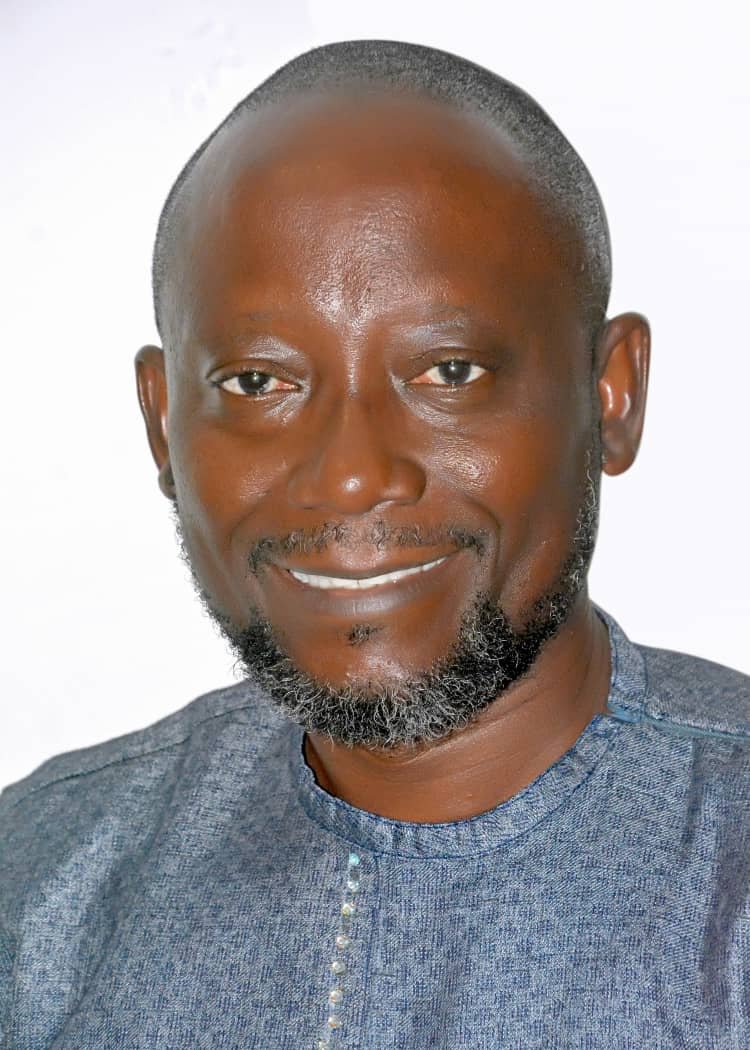
>>> Dr. Paul HERZUAH-the writer is a media & political communication analyst. He is currently a lecturer at the University of Media, Arts & Communication