


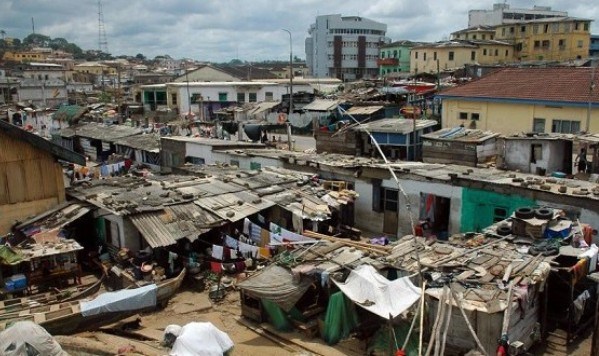
When someone says you are poor, instinctively you think of money and technically you are not entirely wrong.
Ghana’s poverty on a monetary basis has experienced a continuous reduction over 25 years from 51.7 percent in 1991/1992 to 23.4 percent in 2016/2017. Similarly, severe poverty has also declined from 36.5 percent to 8.2 percent over the same period.
However, while monetary poverty has closely been tied to socioeconomic status, with poverty measurement in Ghana, in the past, primarily focused on income deprivation to evaluate the living conditions and overall well-being of the population, it is now widely acknowledged that poverty is multidimensional.
The Sustainable Development Goal (SDG) 1 seeking to “End poverty in ALL ITS FORMS everywhere,” and more specifically, SDG Target 1.2 seeking to “by 2030, reduce at least by half the proportion of men, women and children of all ages LIVING IN POVERTY IN ALL ITS DIMENSIONS according to national definitions” further emphasizes poverty is multidimensional in form and definition.
This implies that consumption expenditure poverty measurements, which is traditionally done in Ghana, may not provide adequate information on the different pathways through which the population experiences poverty. The Computation of the Multidimensional Poverty Index (MPI) provides the opportunity for a country-specific poverty context and a complementary measure of poverty.
So, what then is the Multidimensional Poverty index?
The Multidimensional Poverty Index (MPI) is a multidimensional measure of poverty developed by the Oxford Poverty and Human Development Initiative (OPHI) at the University of Oxford. The index assesses the simultaneous deprivations that are experienced by people in a locality, which are essential to guarantee a dignified life: such as clean water or electricity, poor health or malnutrition and employment.
Ghana’s Multidimensional poverty captures overlapping deprivations experienced by the poor across thirteen non-monetary indicators in four dimensions: education, health, living standards, and employment.
Below are the 13 indicators categorized under the 4 dimensions of poverty and how one is deemed deprived;
Living Conditions
Cooking fuel: A household is deprived if the main source of cooking fuel is firewood or charcoal and the kitchen is indoors
Water: A household is deprived if the main source of water is an unprotected dug well, unprotected spring, tanker trunk, with small cart/drum, river/stream, and other OR the source of water is more than 30 minutes walking distance
Assets: A household is deprived if it does not own at least 2 small assets or a big asset (car)
Housing: A household is deprived if the main construction materials of outside walls is burnt bricks, mud & wattle, tarpaulin, and corrugated iron sheets or if the main floor material is earth/mud or other
Overcrowding: A household is deprived if 3 or more members share a bedroom
Electricity: A household is deprived if they have no electric power
Toilet: A household is deprived if a household uses bucket/pan, pit latrine, public toilet, no facility or other, or it is shared
Education
School attendance: A household is deprived if any school-age child (4-15years) is not attending school
School attainment: A household is deprived if no member household older than (school age 15) has at least 9 years of education
School lag: A household is deprived if a child is attending school but he/she is two or more years behind compared to the expected age/grade relationship.
Health
Mortality: A household is deprived if either a child (5 years) or a pregnant mother died in the household
Health insurance: A household is deprived if there is any member who has not registered for health insurance (private or national health insurance) or is not currently covered under health insurance
Employment: Deprived if no member 15 years and older in the household is employed
A person deprived in at least one-third (33.3%) or more of the weighted indicators is considered multi-dimensionally poor.
Now that we have a fair understanding of Multidimensional Poverty, what do the latest numbers tell us?
According to the Ghana Statistical Service, a total of 7.3 million persons, representing 24.3 percent of the household population are multidimensionally poor. Among these poor persons, 43.8 percent experience severe poverty through deprivations in several dimensions simultaneously.
Additionally, more than a third (36.7%) of persons living in rural areas are multidimensionally poor.
Severity of multidimensional poverty is however about the same in rural (44.0%) and urban (43.4%) areas.
Savannah Region (49.5%) has the highest proportion of its household population who are multi-dimensionally poor, and this is about two times higher than the national average (24.3%).
In nine Regions – Savannah (49.5%), North East (48.1%), Upper East (43.0%), Oti (40.8%), Northern (38.4%), Upper West (37.4%), Volta (27.3%), Western North (27.0%) and Western (25.7%) – more than a quarter of the population have multiple deprivations.
The number of multi-dimensionally poor persons is highest in the Ashanti Region (959,031), followed by the Northern Region (873,742), and lowest in the Ahafo Region (135,644).
Employment (32.6%) and living conditions (27.9%) contribute the most to multidimensional poverty with Health and Education making up (21.7%) and (17.8%) respectively.
The dominant forms of deprivation are the use of unimproved toilets (78.8%), not covered under the health insurance scheme (52.2%), use of poor housing materials (36.0%), overcrowding (34.9%), and school lag (34.4%).
The district with the lowest proportion of its population who are multidimensionally poor is Asokwa Municipal (6.3%) in the Ashanti Region while the Nabdam District (68.6%) in the Upper East Region is the district with the highest.
Three out of the five districts with the highest percent of the population who are multidimensionally poor are in the Savannah Region, namely North Gonja, North East Gonja, and Central Gonja district while four of the districts with the lowest are in the Greater Accra Region; the Ashaiman, Tema West, Ga Central and Ablekuma North Municipalities.
Source: Ghana/Starrfm.com.gh/103.5FM/Edem Kojo


